Tag: Walking with God

  • Seven Miles

    Seven Miles

    Scripture reading: Luke 24:13-35

    It had been a very busy weekend. Jesus Christ, the long-awaited Messiah, had been crucified—painfully and publicly. The one they had hoped would redeem Israel was dead.

    And then came the shocking news on Sunday morning: His tomb was empty. What could it mean?

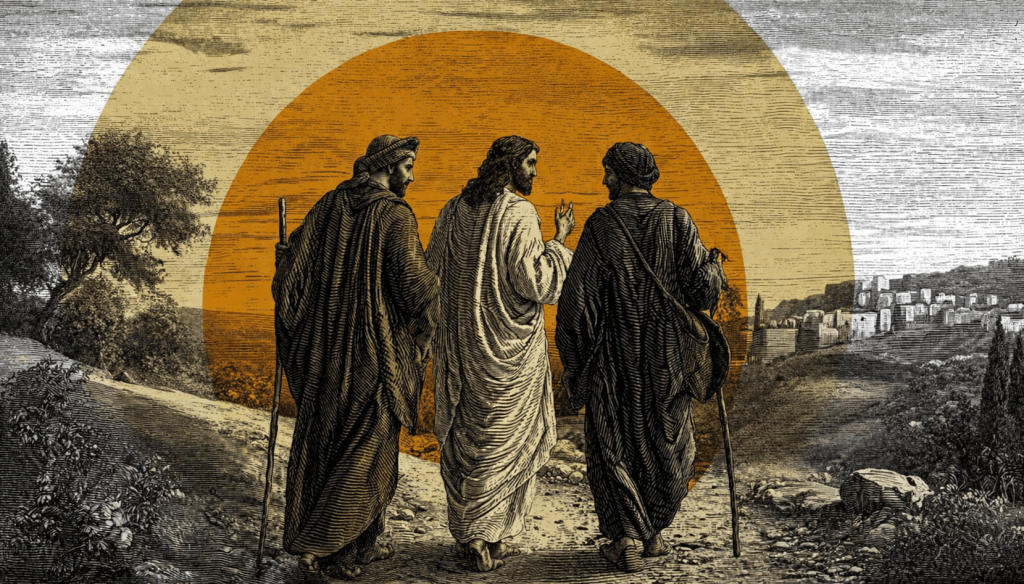
    These were the weighty matters occupying the hearts of Cleopas and his companion as they journeyed some seven miles from Jerusalem to Emmaus. These were disciples who had walked with Jesus, witnessed His works, and heard His teachings. Yet, they struggled to make sense of recent events.

    As they talked, an unexpected stranger joined them. Unrecognised, He listened as they recounted everything that had happened, even expressing surprise that He seemed unaware: “Are you the only one visiting Jerusalem who does not know the things that have happened there in these days?”

    Then came His piercing response: “How foolish you are, and how slow to believe all that the prophets have spoken!” (Luke 24:25).

    In that moment, their problem was not a lack of information; it was a lack of understanding and belief. And in the same way, we are called to examine our own doubts and spiritual blind spots.

    Did they truly know who they were talking about?

    They described Jesus as “a prophet, powerful in word and deed before God and all the people” (Luke 24:19). But He is far more than a prophet. He is God in the flesh (John 1:1, 14). No mere man has the authority to lay down his life and take it up again (John 10:17–18).

    They continued, “The chief priests and our rulers handed him over to be sentenced to death, and they crucified him” (Luke 24:20). While human hands carried out the act, this was not a tragic accident; it was for a divine purpose. As Jesus had already taught, “Did not the Messiah have to suffer these things and then enter his glory?” (Luke 24:26; see also Isaiah 53:5).

    Their disappointment is palpable: “But we had hoped that he was the one who was going to redeem Israel” (Luke 24:21). Hope, in their eyes, had died on the cross.

    Yet what they could not yet see was this: the cross was not the end. It was the pathway to victory. The resurrection changes everything. Through Christ, death has been defeated (1 Corinthians 15:54–57), sin has lost its power, and fear no longer has the final say.

    If only they could see it.

    But isn’t that often our story too? We walk weighed down by confusion and disappointment, even when the truth is right beside us.

    The journey to Emmaus became a life-changing encounter. As Jesus walked with them, explained the Scriptures, and later revealed Himself in the breaking of bread (Luke 24:30–31), their eyes were opened and their hearts set ablaze: “Were not our hearts burning within us while he talked with us on the road and opened the Scriptures to us?” (Luke 24:32).

    This is the journey we are all invited into—to walk closely with the Lord, to listen to His Word, to sit at His feet, and to commune with Him until He reveals Himself more fully to us. Beyond the surface, we are called to experience a more intimate relationship with Him.

    And here is the greatest news, still as powerful today as it was then: Jesus is alive (Matthew 28:6).

    And it only gets better from here.

    Reflection

    1. Do I truly know who Jesus Christ is?
    Like the disciples, it’s possible to walk with Jesus, hear His Word, and still misunderstand His identity. They called Him a prophet, but He is Lord and God (John 1:1, 14). Is my faith based on partial understanding, or do I fully acknowledge Him as Saviour and Lord over my life? How intimately do you know Jesus?

    2. Am I slow to believe what God has already said?
    Jesus rebuked them for being “slow to believe all that the prophets have spoken” (Luke 24:25). Their discouragement came from forgetting or misinterpreting Scripture. In moments of confusion or delay, do I trust God’s Word, or do I let doubt shape my perspective?

    3. Am I walking closely enough with Him to recognize His presence?
    The disciples didn’t recognize Jesus until He revealed Himself (Luke 24:31), but their hearts burned as He spoke. Intimacy preceded revelation. Am I creating space to walk with Him daily through Scripture, prayer, and fellowship so that I can discern His voice and presence?

    Prayer

    Lord Jesus, open my eyes to truly know You— not just in word, but in truth and power. Strengthen my faith where I doubt, and anchor my heart in Your Word. Lead me daily, that I may walk with You,
    and live in the power of Your resurrection.

    Let my heart burn for You always. Amen.

    Thank you for joining us for today’s encouragement. If this message blessed you, kindly share it with someone who may also be encouraged by it.

    Until next time, stay blessed.
  • Vital Signs

    Vital Signs

    Scripture reading: Mark 11:12-14, Luke 13:6-9

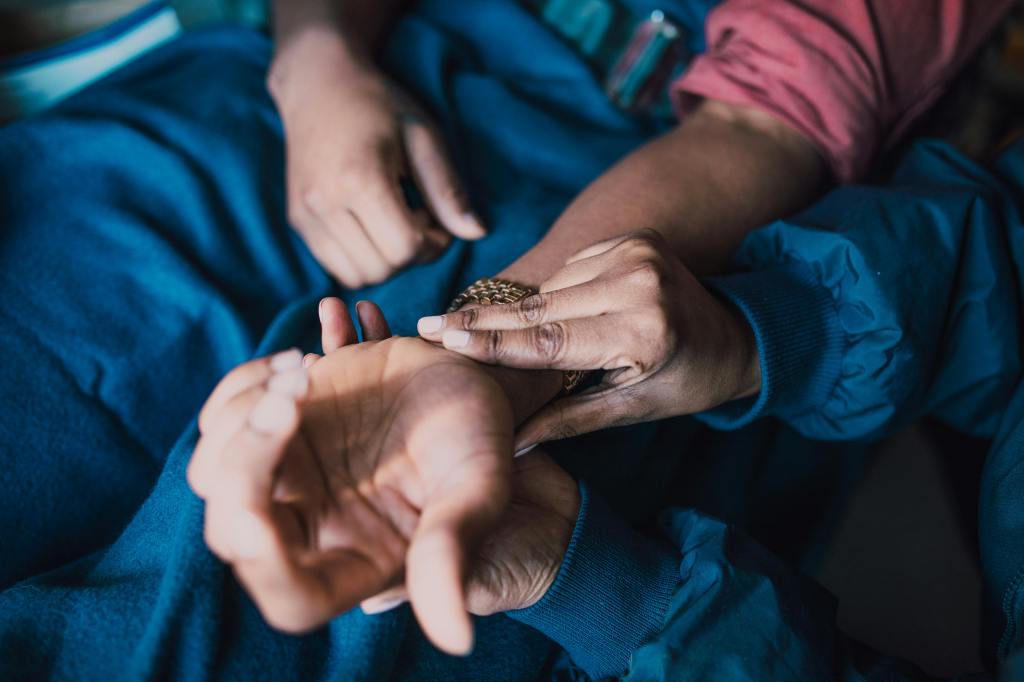
    Have you ever visited a clinic where a healthcare professional checks your temperature, pulse, blood pressure, or respiratory rate? Ever wondered why? These measurements are called vital signs, basic indicators that reveal how well your body’s essential systems are functioning. Think of them as the body’s quick status check: the warning lights on a car’s dashboard, or even your bank balance, if you catch my drift.

    In today’s reading from Mark, we encounter Jesus performing a quick “status check” of His own, on a fig tree. He was hungry and saw the tree from a distance. It had leaves. That was promising.
    When a fig tree has leaves, fruit should follow. Jesus knew this. It was expected. The vital signs pointed to a healthy, fruitful tree. Yet when He approached the tree, He found nothing. No fruit. Only leaves. How disappointing!

    Luke records a similar moment in the parable of the barren fig tree. The owner of the vineyard, God, comes expecting fruit from His tree: us. He expects it. And rightly so. Considering the immense investment of His only begotten Son, Jesus, the keeper of the vineyard, who tends, nourishes, and intercedes for us, how could He expect anything less?

    The owner says to the keeper of the vineyard, “Look, for three years I have come seeking fruit on this fig tree and find none. Cut it down; why should it use up the ground?”

    But the vinedresser pleads, “Sir, let it alone this year also, until I dig around it and fertilize it. And if it bears fruit, well. But if not, after that you can cut it down.”

    The question presses itself upon us: Are we bearing fruit?

    Fruition is the natural outcome of a branch’s connection to the vine (John 15:4–5). Fruit does not come from striving, but from abiding. The presence, or absence, of fruit is a vital sign that reveals the health of our relationship with God. Are we bearing fruit?

    Fruit is what the world experiences when it encounters us. It is the visible result of the inward work of the Holy Spirit (Galatians 5:22–23): love, joy, peace, patience, kindness, goodness, faithfulness, gentleness, and self-control. Are we bearing fruit?

    Fruit is the quiet but irresistible light your good deeds give off, the savour of Christ your life exudes, causing others to glorify God (Matthew 5:16). Are we bearing fruit?

    Biologically, fruits exist to carry seeds to ensure continuation and multiplication, even under harsh conditions. Spiritually, fruit looks like witness and disciple-making: lives transformed and faith reproduced (Matthew 28:19–20). Are we bearing fruit?

    One remarkable thing about fig trees is that they advertise their fruit by producing leaves. Which leads to a sobering question: if we profess Christ, what evidence do we offer to support that claim?

    In today’s scripture, we find Jesus’ heart-warming plea when the owner of the vineyard asked for the unfruitful tree to be cut down: “Sir, let it alone this year … until I dig around it and fertilize it…”

    This is mercy. But it is mercy with an expectation. Jesus has allowed us the opportunity and mercy of the present to get things right: to abide closely, love Him more dearly and follow Him more nearly. Christ’s sacrifice must count for something!

    “That [we] may walk worthy of the Lord, fully pleasing Him, being fruitful in every good work and increasing in the knowledge of God” (Colossians 1:10).

    Let us pray

    Father,
    We come before You with open hearts and unguarded lives.
    You see us as we truly are, beyond appearances, beyond leaves and language.
    You search for fruit.

    Lord, we confess that there are seasons when we look alive,
    yet inwardly we have grown barren.
    We have mastered the form, but neglected the flow.
    We have worn the leaves, but withheld the fruit.

    Thank You for Your patience.
    Thank You for the mercy that digs around our roots,
    for the grace that fertilizes tired soil,
    for the Son who intercedes when judgment feels deserved.

    Teach us to abide in You,
    To remain close to You, the true Vine.
    Let Your Spirit work deeply within us,
    producing love where there was indifference,
    peace where there was restlessness,
    and obedience where there was resistance.

    Make our lives a blessing others can taste.
    Let our words, our actions, and our presence
    quietly point the world back to You.
    May our lives proclaim Your glory
    without needing to announce it.

    Lord, while there is still time,
    Do Your work in us.
    Prune what must be removed.
    Strengthen what is weak.
    And let us be found fruitful,
    fully pleasing to You.

    We ask this in the name of Jesus,
    the faithful Keeper of the vineyard.

    Amen.