
Tag: spiritual growth

  • Homeostasis

    Homeostasis

    Scripture reading: Matthew 5:13-16

    Homeostasis is the body’s capacity to maintain a stable internal environment despite constant internal and external change. Cells can only function properly within carefully regulated conditions. When these limits are breached, enzymes fail, membranes break down, and vital processes are disrupted. Many diseases reflect a breakdown of homeostasis, and medicine, at its core, seeks to restore or support this delicate balance.

    In today’s passage, Jesus introduces two elements without which life itself quickly deteriorates: salt and light. He uses these necessities to describe the indispensable role we, as His followers, are meant to play in the world.

    “You are the salt of the earth,” He says. Salt is simple, yet its absence is immediately noticeable. Its ability to enhance flavour is unmatched, and its role in preventing decay is well established. In the human body, salt is central to homeostasis. It is essential in regulating body fluid balance, nerve conduction, muscle activity, and circulation. In moments of life-threatening shock, a simple infusion of saline can mean the difference between life and death. Ordinary salt. Through this image, Jesus calls us to preserve moral and spiritual balance, to resist corruption, to restore the lost, and to reconcile people to Him. We are meant to influence society through Christ, not be shaped by it.

    But He adds a warning: “If the salt loses its flavour, how shall it be seasoned?” When those meant to influence lose their distinctiveness and become the ones being influenced, their effectiveness is lost. Loss of identity leads inevitably to loss of impact.

    Jesus then declares, “You are the light of the world.” Life cannot flourish without light. Plants depend on it for growth; without it, nothing can be seen. Light brings visibility, direction, and clarity. In a world growing ever darker, Christ calls us to be a visible beacon of hope, like a lighthouse, guiding the lost home. A hidden light fails its purpose; influence must be seen to be effective.

    The remarkable truth about both salt and light is that only a small amount is needed to make a real difference. Today’s encouragement is a simple but demanding call: brighten the corner where you are. Let your light shine before others, so that they may see your good works and glorify your Father in heaven.

    Homeostasis is about balance, not compromise; distinction, not dilution. We are called to preserve, not decay; to illuminate, not eclipse. We are called to live as worthy ambassadors of Christ wherever we are (2 Corinthians 5:20).

    Reflections

    1. Where has God placed me right now, and in what specific ways am I actively preserving what is good rather than merely avoiding what is bad?

    2. In what areas have I begun to lose my distinctiveness as a follower of Christ, and how has that affected my influence?

    3. Who around me is living in confusion, decay, or darkness, and what visible, loving action can I take this week to point them toward Christ?

    Let us Pray

    Lord Jesus, You have called me salt and light, yet I confess how easily I lose my distinctiveness. Restore in me what compromise has dulled and what fear has hidden. Where my presence has been silent, make it preserving. Where my light has been dim, let it shine again.

    Teach me to hold the balance You designed, not blending into decay, not withdrawing from need, but standing quietly faithful. Use my words, my choices, and even my stillness to point others to You. Let my life bring healing, clarity, and hope, so that in every place I stand, You are seen and glorified.

    Amen.
  • Vital Signs

    Vital Signs

    Scripture reading: Mark 11:12-14, Luke 13:6-9

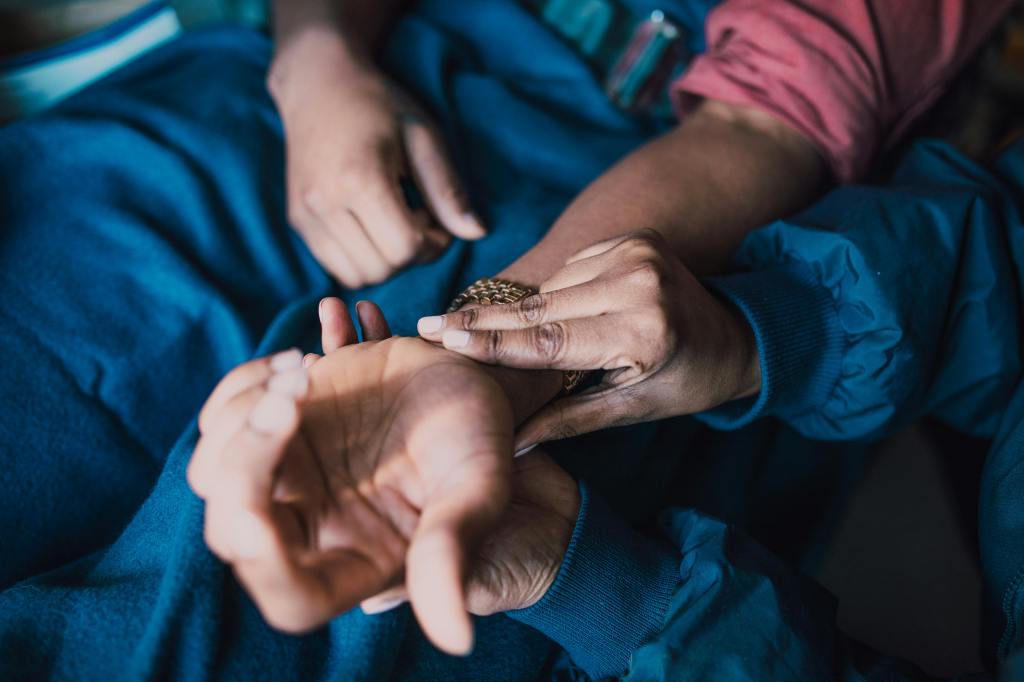
    Have you ever visited a clinic where a healthcare professional checks your temperature, pulse, blood pressure, or respiratory rate? Ever wondered why? These measurements are called vital signs, basic indicators that reveal how well your body’s essential systems are functioning. Think of them as the body’s quick status check: the warning lights on a car’s dashboard, or even your bank balance, if you catch my drift.

    In today’s reading from Mark, we encounter Jesus performing a quick “status check” of His own, on a fig tree. He was hungry and saw the tree from a distance. It had leaves. That was promising.
    When a fig tree has leaves, fruit should follow. Jesus knew this. It was expected. The vital signs pointed to a healthy, fruitful tree. Yet when He approached the tree, He found nothing. No fruit. Only leaves. How disappointing!

    Luke records a similar moment in the parable of the barren fig tree. The owner of the vineyard, God, comes expecting fruit from His tree: us. He expects it. And rightly so. Considering the immense investment of His only begotten Son, Jesus, the keeper of the vineyard, who tends, nourishes, and intercedes for us, how could He expect anything less?

    The owner says to the keeper of the vineyard, “Look, for three years I have come seeking fruit on this fig tree and find none. Cut it down; why should it use up the ground?”

    But the vinedresser pleads, “Sir, let it alone this year also, until I dig around it and fertilize it. And if it bears fruit, well. But if not, after that you can cut it down.”

    The question presses itself upon us: Are we bearing fruit?

    Fruition is the natural outcome of a branch’s connection to the vine (John 15:4–5). Fruit does not come from striving, but from abiding. The presence, or absence, of fruit is a vital sign that reveals the health of our relationship with God. Are we bearing fruit?

    Fruit is what the world experiences when it encounters us. It is the visible result of the inward work of the Holy Spirit (Galatians 5:22–23): love, joy, peace, patience, kindness, goodness, faithfulness, gentleness, and self-control. Are we bearing fruit?

    Fruit is the quiet but irresistible light your good deeds give off, the savour of Christ your life exudes, causing others to glorify God (Matthew 5:16). Are we bearing fruit?

    Biologically, fruits exist to carry seeds to ensure continuation and multiplication, even under harsh conditions. Spiritually, fruit looks like witness and disciple-making: lives transformed and faith reproduced (Matthew 28:19–20). Are we bearing fruit?

    One remarkable thing about fig trees is that they advertise their fruit by producing leaves. Which leads to a sobering question: if we profess Christ, what evidence do we offer to support that claim?

    In today’s scripture, we find Jesus’ heart-warming plea when the owner of the vineyard asked for the unfruitful tree to be cut down: “Sir, let it alone this year … until I dig around it and fertilize it…”

    This is mercy. But it is mercy with an expectation. Jesus has allowed us the opportunity and mercy of the present to get things right: to abide closely, love Him more dearly and follow Him more nearly. Christ’s sacrifice must count for something!

    “That [we] may walk worthy of the Lord, fully pleasing Him, being fruitful in every good work and increasing in the knowledge of God” (Colossians 1:10).

    Let us pray

    Father,
    We come before You with open hearts and unguarded lives.
    You see us as we truly are, beyond appearances, beyond leaves and language.
    You search for fruit.

    Lord, we confess that there are seasons when we look alive,
    yet inwardly we have grown barren.
    We have mastered the form, but neglected the flow.
    We have worn the leaves, but withheld the fruit.

    Thank You for Your patience.
    Thank You for the mercy that digs around our roots,
    for the grace that fertilizes tired soil,
    for the Son who intercedes when judgment feels deserved.

    Teach us to abide in You,
    To remain close to You, the true Vine.
    Let Your Spirit work deeply within us,
    producing love where there was indifference,
    peace where there was restlessness,
    and obedience where there was resistance.

    Make our lives a blessing others can taste.
    Let our words, our actions, and our presence
    quietly point the world back to You.
    May our lives proclaim Your glory
    without needing to announce it.

    Lord, while there is still time,
    Do Your work in us.
    Prune what must be removed.
    Strengthen what is weak.
    And let us be found fruitful,
    fully pleasing to You.

    We ask this in the name of Jesus,
    the faithful Keeper of the vineyard.

    Amen.

  • Growth Restriction

    Growth Restriction

    Scripture reading: Matthew 13:1-9, 18 -23

    In early intrauterine life, a fetus grows primarily by increasing the number of its cells. Cells, as we know, are the basic building blocks of life. Later in pregnancy, growth occurs mainly through an increase in cell size. When either of these processes is disrupted, the result is a condition known as fetal growth restriction.

    Not every baby born small is unhealthy. But when a fetus fails to reach its genetically predetermined growth potential because of external influences, it becomes a serious concern. Congenital infections, exposure to toxins, and maternal medical conditions that impair nutrient delivery can all restrict growth. In short, a fetus’s environment plays a decisive role in how fully it develops.

    The Christian life follows a similar pattern.

    The natural progression of a believer is to first believe, then grow through discipleship, and ultimately to lead and make other disciples. Like fetal growth, this journey is deeply shaped by environment. Jesus makes this unmistakably clear in today’s Scripture reading: only seeds sown on good soil reach their true potential, producing yields of thirty, sixty, or even a hundredfold—a return of 3,000% to 10,000%! How much are you producing? Are you planted in good soil?

    What makes good soil?

    Good soil is protected. It is fenced off and not trampled along a path where the enemy can easily snatch the seed away. It is an environment where the Word of God is taught faithfully, discussed honestly, and studied deeply. A place where truth is not rushed, diluted, or distorted, but given time to take root. It is marked by dedication, consistency, and discipline, and free from confusion and persistent doubt.

    Good soil has depth. It must be deep enough to accommodate roots. Roots keep you grounded. It is an environment that nurtures convictions strong enough to withstand heat and pressure, trials and tribulations.

    Good soil must also be carefully, diligently, and intentionally maintained. Thorns—comforts, distractions, anxieties, and the relentless pull of this world—must be uprooted regularly, lest they choke the life out of what is growing.

    When fetal growth restriction is diagnosed, the next step is to identify the underlying cause. The physician searches for the most plausible explanation and intervenes to preserve life. Jesus does the same in today’s reading. He offers clear diagnostics that help us locate the problem.

    Do you feel stunted, empty, dried up, or choked out? Do you feel unyielding in your walk with God? Then the next step is to examine your environment. Where are you planted? Where are you growing? Are you along the path—shaped more by the world’s expectations than God’s calling? Among rocks—enthusiastic but shallow, Christian in name but not in depth? Or among thorns—slowly suffocated by cares, pleasures, and the pursuit of riches?

    Once the diagnosis is made, the next step is treatment.

    Jesus says in John 15:1–8, “I am the true vine, and My Father is the vinedresser… Abide in Me, and I in you.” The key to more fruit is abiding in the true vine—total dependence on Jesus. Clinging to His Word, remaining grafted through consistent prayer, and living continually in the shade of His presence. Once connected to the life source, fruit becomes inevitable, and the Vinedresser shapes us toward greater productivity.

    Growth is not automatic. But when the environment is right, fruit is inevitable.

    Prayer

    Father, You are the source of life and growth. Search our hearts and show us where we are planted. If our environment has stunted our fruit, give us the grace to change it.

    Where we are shallow, give us depth.
    Where we are distracted, help us uproot what chokes Your work in us.
    Teach us to abide fully in the true vine.

    Prune what must be pruned so that more fruit may come. Anchor us in Your Word, form discipline in our prayers, and surround us with healthy fellowship.

    Make our lives good soil.
    We choose to remain in You.

    In Jesus’ name,
    Amen.

  • Action and Reaction

    Action and Reaction

    Scripture reading: John 12:20—26

    Scientific laws are irrefutable truths, tried, tested, and proven over time, that describe the physical world we live in. Newton’s laws of motion are among the most familiar examples. This year, we have been exploring spiritual truths by linking them to these laws of the natural world.

    In Inertia, we confronted the heart’s resistance to movement—the tendency to remain at rest even when Jesus calls us forward. Comfort disguised as faithfulness. Stillness mistaken for obedience.

    In Newton’s Second Law, we examined the forces that act against movement: the weight of fear, distraction, obligation, and attachment. We learned that even when the desire to follow Jesus is present, these weights can slow acceleration and stall progress.

    Today, we arrive at Newton’s Third Law—Action and Reaction.

    Newton’s Third Law tells us that motion is always the result of interaction: ‘For every action, there is an equal and opposite reaction’. When a swimmer pushes water backwards, the water pushes the swimmer forward. When a gun is fired, the bullet moves forward, and the gun recoils backwards with equal force. A rocket is propelled upward only because it pushes gases downward at high speed. An action without a reaction produces no movement, only effort without progress.

    This law shows us something crucial: no object gains momentum in isolation. Momentum is built through relationship. When you walk, your foot pushes backwards against the ground, and the ground pushes forward against you, propelling you ahead. In the same way, when we move toward Jesus, He meets us in that movement. Our obedience is answered with His presence. Our surrender is met with grace. Our weakness is met with strength.

    At times, the call to discipleship can feel draining, like a seed falling into the ground and dying. But be assured: you are not losing at all. In physics, total momentum is conserved because every action has a reaction. Momentum does not disappear; it is transferred. Spiritually, obedience is never wasted. Every step you take toward God changes something—within you and beyond you. Your movement creates ripple effects.

    Jesus says, “Unless a grain of wheat falls into the ground and dies, it remains alone; but if it dies, it produces much grain.” Growth can be gruelling. Obedience can be costly. But maturity is not optional—it is the standard we are called toward.

    At its core, today’s scripture speaks about sacrifice. Sacrifice is the giving up of something valuable (like time, comfort, resources, even life) for a higher purpose. A disciple must be willing to lose to gain. This is the wheel around which obedience turns. This is what it means to follow.

    And what gain it is.

    “If anyone serves Me, let him follow Me; and where I am, there My servant will be also. If anyone serves Me, him My Father will honour.”

    Reflection

    Momentum in the Christian life is not built by intensity, but by relationship.

    How can you improve your relationship with Christ through dedicated prayer times, word-study and fellowship?

    Each step toward Christ invites His response. No act of faith is wasted. No sacrifice goes unnoticed. As you reflect today, consider what small, faithful action God may be inviting you to take, not to prove your devotion, but to deepen your walk with Him.

    Prayer

    Lord Jesus, I lay my life before You—my plans, my fears, my desires, and my comforts.
    I surrender my will to Yours, trusting that every step I take toward You is met by Your presence and Your power.
    Teach me to move with You, not by striving alone, but by trusting Your response in every act of obedience.
    Take my hands, my feet, my heart, and use them as You will, even when the path feels uncertain or costly.
    Let my surrender become momentum—a force that carries life, grace, and Your love to others.
    I give You all of me today, Lord, not holding back, not clinging to control, but trusting completely that where You are, I will also be.
    Amen.