

Tag: Prayer

  • Action and Reaction

    Action and Reaction

    Scripture reading: John 12:20—26

    Scientific laws are irrefutable truths, tried, tested, and proven over time, that describe the physical world we live in. Newton’s laws of motion are among the most familiar examples. This year, we have been exploring spiritual truths by linking them to these laws of the natural world.

    In Inertia, we confronted the heart’s resistance to movement—the tendency to remain at rest even when Jesus calls us forward. Comfort disguised as faithfulness. Stillness mistaken for obedience.

    In Newton’s Second Law, we examined the forces that act against movement: the weight of fear, distraction, obligation, and attachment. We learned that even when the desire to follow Jesus is present, these weights can slow acceleration and stall progress.

    Today, we arrive at Newton’s Third Law—Action and Reaction.

    Newton’s Third Law tells us that motion is always the result of interaction: ‘For every action, there is an equal and opposite reaction’. When a swimmer pushes water backwards, the water pushes the swimmer forward. When a gun is fired, the bullet moves forward, and the gun recoils backwards with equal force. A rocket is propelled upward only because it pushes gases downward at high speed. An action without a reaction produces no movement, only effort without progress.

    This law shows us something crucial: no object gains momentum in isolation. Momentum is built through relationship. When you walk, your foot pushes backwards against the ground, and the ground pushes forward against you, propelling you ahead. In the same way, when we move toward Jesus, He meets us in that movement. Our obedience is answered with His presence. Our surrender is met with grace. Our weakness is met with strength.

    At times, the call to discipleship can feel draining, like a seed falling into the ground and dying. But be assured: you are not losing at all. In physics, total momentum is conserved because every action has a reaction. Momentum does not disappear; it is transferred. Spiritually, obedience is never wasted. Every step you take toward God changes something—within you and beyond you. Your movement creates ripple effects.

    Jesus says, “Unless a grain of wheat falls into the ground and dies, it remains alone; but if it dies, it produces much grain.” Growth can be gruelling. Obedience can be costly. But maturity is not optional—it is the standard we are called toward.

    At its core, today’s scripture speaks about sacrifice. Sacrifice is the giving up of something valuable (like time, comfort, resources, even life) for a higher purpose. A disciple must be willing to lose to gain. This is the wheel around which obedience turns. This is what it means to follow.

    And what gain it is.

    “If anyone serves Me, let him follow Me; and where I am, there My servant will be also. If anyone serves Me, him My Father will honour.”

    Reflection

    Momentum in the Christian life is not built by intensity, but by relationship.

    How can you improve your relationship with Christ through dedicated prayer times, word-study and fellowship?

    Each step toward Christ invites His response. No act of faith is wasted. No sacrifice goes unnoticed. As you reflect today, consider what small, faithful action God may be inviting you to take, not to prove your devotion, but to deepen your walk with Him.

    Prayer

    Lord Jesus, I lay my life before You—my plans, my fears, my desires, and my comforts.
    I surrender my will to Yours, trusting that every step I take toward You is met by Your presence and Your power.
    Teach me to move with You, not by striving alone, but by trusting Your response in every act of obedience.
    Take my hands, my feet, my heart, and use them as You will, even when the path feels uncertain or costly.
    Let my surrender become momentum—a force that carries life, grace, and Your love to others.
    I give You all of me today, Lord, not holding back, not clinging to control, but trusting completely that where You are, I will also be.
    Amen.
  • Stone or bread

    Stone or bread

    In clinical practice, patients often come with expectations, preferences, or even self-diagnoses. A client may ask for a particular test, drug, or procedure. But as a clinician, you know that their request may not always be in their best interest. Your role is to listen with compassion, then guide them toward what is safe, effective, and ultimately for their good—even if it’s different from what they initially wanted.

    Parents deal with something similar. My toddler loves to pick up things—some safe, some harmful. She may cry, protest, or throw a tantrum when I take away what she wants, but part of my role as a parent is to know what is truly good for her. I will never hand her something that would hurt her, no matter how hard she pleads. Love sometimes means saying no.

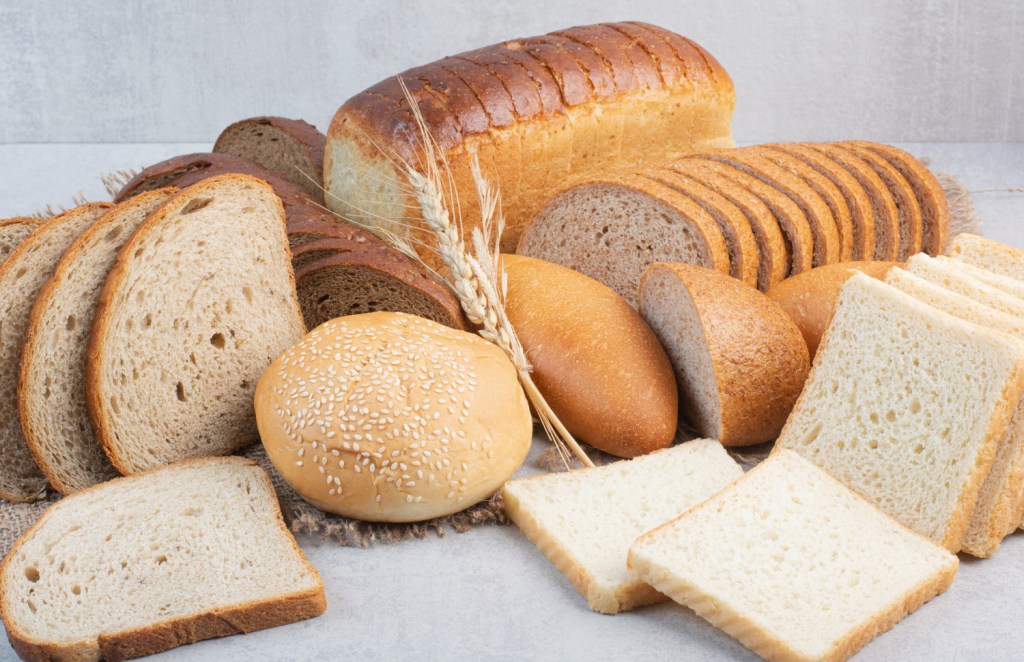
    This is the heart of Matthew 7:7–11. Jesus tells us to ask, seek, and knock—and assures us that our Father in heaven will answer. But like toddlers with their parents, or patients with their clinicians, we don’t always know what is best for us. God, however, does. God, in His wisdom, sometimes says no or wait, not because He is withholding good from us, but because He is protecting us from harm or preparing us for something better. He is the Father who never gives a stone when we ask for bread, or a snake when we ask for fish. He may not always give us exactly what we want, but He always gives us what is good.

    So whether in parenting, in medicine, or in our walk with God, love is not about granting every request—it is about providing what brings life, growth, and true blessing. And we can trust that our heavenly Father, far wiser and kinder than any earthly parent or clinician, will always do just that.

    Applications

    1. Trust God’s wisdom – When God answers differently than we expected, remind yourself that His love always seeks your good.
    2. Practice discernment in prayer – Instead of only asking for what you want, also pray: “Lord, give me what You know is best.”
    3. Patience in waiting – Just as a child eventually sees why the parent withheld something, we too may only understand God’s “no” in hindsight.

    Reflections

    • Can I recall a time when God did not give me what I prayed for, but later I saw it was for my good?
    • In what ways do I need to trust His wisdom more deeply right now?
    • How can I model God’s loving discernment in how I guide others under my care?

    Let us pray

    Heavenly Father, thank You for being wiser than my desires and more loving than my understanding. Forgive me when I confuse Your no or wait for neglect. Teach me to trust that You always give good gifts, even when they look different from what I asked for. Help me reflect Your wisdom and love in the way I guide others—whether as a parent, a professional, or a friend. May my life bear witness to the truth that You are a good Father who gives not stones or snakes, but bread and fish. In Jesus’ name, Amen.

  • When we pray

    When we pray

    Scripture reading: Matthew 6:5-15, NKJV

    Strong relationships are built on robust communication. Many relationships falter because of communication breakdowns. Christianity, unlike organized religion, is a relationship— one that must be actively maintained through constant, heartfelt communication with God. Prayer is not optional for the Christian; it is essential. It is on this premise that Jesus taught His disciples to pray.

    Jesus emphasized that prayer must be sincere. It must not be draped in flowery language to impress onlookers or ‘manipulate’ God. Prayer is not for show; it is not an exhibit of piety. Eloquence and verbosity do not sway God—it is the heart that moves Him. Prayer must be intimate and precise, and grounded firmly in faith.

    When we pray, we must know who we are addressing: Our Father in Heaven. A Father who cares and loves us deeply. A Father who has our best interests at heart. A willing Father. A dependable Father. Our Father. The word “our” reminds us that we are not alone. We are not alone in our struggles. We are not alone in our journey. We have community, and we have a God who hears us. This understanding must shape our posture in prayer.

    “Hallowed be Your name. Your kingdom come. Your will be done on earth as it is in heaven.”  Prayer begins with God—not us. When we pray, our primary focus should be God’s glory—His Name, His Kingdom, His Will. We pray for God’s name to be honoured in our lives, our circles, and our world. We pray for the earth to be filled with the knowledge of the glory of the Lord, as the waters cover the sea. We pray for His Kingdom to be established on earth and for His will to prevail. We pray for the spread of the gospel, for the salvation of many searching for hope, for healing for the sick, and for liberation of the oppressed. Our prayers must first be directed toward God—and then they can reflect on our needs. Seek first His Kingdom…

    “Give us this day…” One of the cures for worry is daily dependence on God’s provision. In prayer, we entrust our needs to Him. We have a Father who knows us and knows our needs even before we voice them. A Father who gives good gifts to His children. A Father who forgives—and, as He forgives us, our default response to those around us must be one of ready forgiveness.

    When we pray, we must ask for the discipline to resist temptation, and the grace to be delivered from evil. We must pray for wisdom to navigate the inevitable “thirst traps” that plague today’s world, and for the laser-sharp focus to pursue righteousness. We must ask for the strength and endurance to run without growing weary, and the resilience to ultimately overcome.

    When we pray, we lose ourselves and become more and more like our Father in heaven.
    When we pray, we make room for God to reveal His glory more clearly in our lives.
    When we pray, we build the resilience to withstand the storms that life brings our way.
    So pray—because the fervent, constant prayer of the righteous is powerful and effective.

    Let us pray.

    Our Father in heaven,
    Hallowed be Your name.
    Your kingdom come.
    Your will be done
    On earth as it is in heaven.
    Give us this day our daily bread.
    And forgive us our debts,
    As we forgive our debtors.
    And do not lead us into temptation,
    But deliver us from the evil one.
    For Yours is the kingdom and the power and the glory forever.

    Amen.

    Reflection

    What is your prayer life like, and how can you improve it by incorporating the lessons from today’s message?