Tag: Miracle

  • Near-miss

    Near-miss

    Scripture reading: John 11:1-44

    In reproductive health circles, a maternal near-miss refers to a situation where a woman almost dies but survives a life-threatening complication during pregnancy, childbirth, or within 42 days of the termination of pregnancy.

    Recently, we had such a near-miss. A client who had undergone an emergency caesarean delivery at a peripheral facility was referred to us because her condition was steadily deteriorating post-operatively. On arrival, we assessed her and found she was bleeding internally. She required massive blood transfusion and urgent surgery. While resuscitating her in preparation for the procedure, her heart stopped. She had to be revived. We nearly lost her.

    In the case of Lazarus, he actually died. Jesus’ appointment with His sick friend had been delayed and by the time He arrived, it was four days too late—at least, that was what Mary and Martha thought. The good Teacher had however been intentional in His delay—“that the Son of God may be glorified through it” (John 11:4).

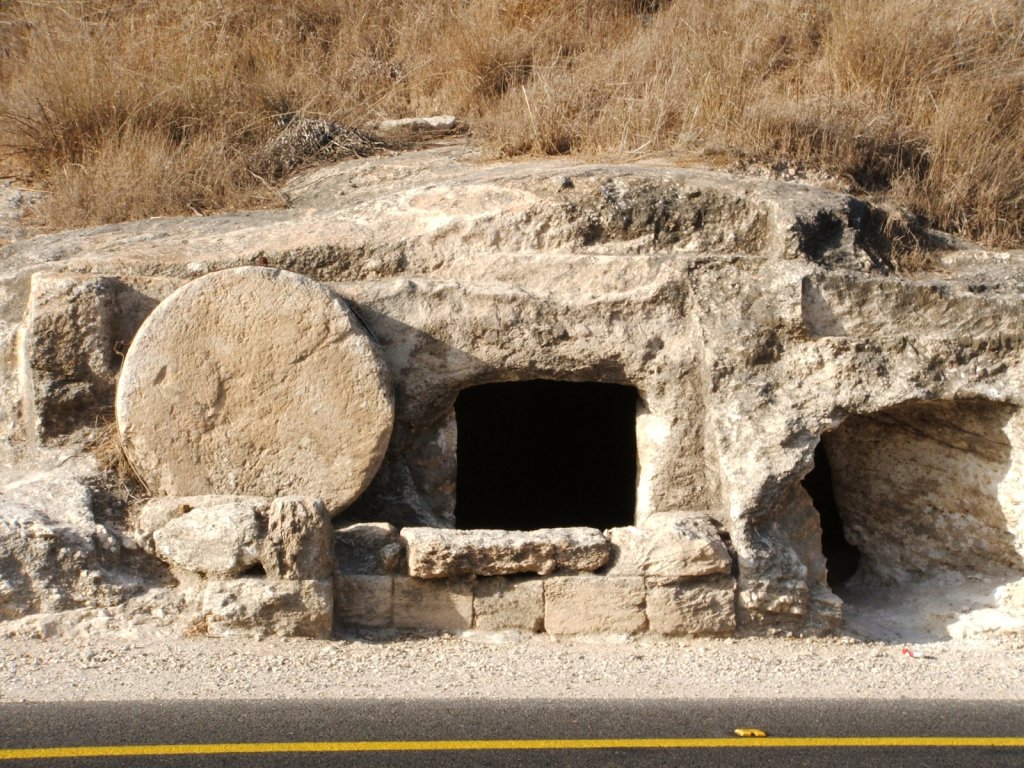
    Jesus arrived at His destination to find His friends mourning, and He mourned with them. He was so moved by their loss that He wept (John 11:35). Jesus feels our pain. He knows about our sufferings. But more importantly, He cares. Groaning in Himself, Jesus came to the tomb. It was a cave, and a stone lay against it. Then Jesus said, “Take away the stone.” Martha, the sister of him who was dead, said to Him, “Lord, by this time there is a stench, for he has been dead four days.”

    Four days after a person dies, the body undergoes significant changes due to decomposition. Initially, the body temperature drops and the muscles stiffen due to rigor mortis, which then gradually fades. Internally, autolysis begins, where enzymes start breaking down cells. This is followed by putrefaction—bacterial activity that causes bloating, discolouration, and the release of foul odours. Gases produced in this process cause the body to swell and leak fluids from its openings. That was Lazarus’ state when Jesus cried out with a loud voice, “Lazarus, come forth!” And immediately, he who had died came out.

    “Did I not say to you that if you would believe, you would see the glory of God?” (John 11:40). Jesus does not miss. But we might narrowly miss out on our miracle if we give in to fear and doubt.

    However bad you think your situation is, as putrid or hopeless as it may seem, Jesus can turn it around. Believe. God can use your pain and misfortune for His glory. Hang in there. Bright skies are coming, where dark clouds have been. Glory is coming!

    Let’s pray

    Thank You for being the God who sees, who feels, and who cares. Thank You for the assurance that even when it seems too late, You are still able to bring life out of death and beauty from brokenness. Like Lazarus, I may face seasons where everything looks hopeless—where the situation stinks and the door is sealed shut—but You are never too late.

    Strengthen my faith to believe even when it hurts, to trust even when I don’t understand. Help me not to give in to fear or doubt. Teach me to wait on You with expectation, knowing that Your glory can still shine through my trials. Revive whatever is dying in me—hope, dreams, relationships, purpose—and call it forth to life again.

    I yield my pain, my past, and my fears to You. Let Your glory be revealed in and through me. In Jesus’ name I pray, Amen.

    Reflections

    1. What situations in your life currently feel hopeless or “too far gone”? Have you brought them before Jesus?
    2. How do you typically respond when God seems delayed?
    3. Can you identify a past experience where God used your pain or delay for something greater? How did that change your view of Him?
    4. What “stone” might Jesus be asking you to roll away—something blocking your faith or obedience?
    5. What would it look like for you to “believe and see the glory of God” in your present circumstance?
  • The storm is over!

    The storm is over!

    Scripture reading: Mark 4:35–41

    My first real experience of ‘turbulence’ was probably when I encountered an eclamptic patient for the first time. She was a young woman, about seven months into her first pregnancy, who had been wheeled into the emergency room a few minutes after having a fit and losing consciousness. She went on to have a series of violent seizures — several bouts of vehement, untamable tremors involving her entire body — that had to be aborted with waves and waves of intravenous anticonvulsants. It was like a storm.

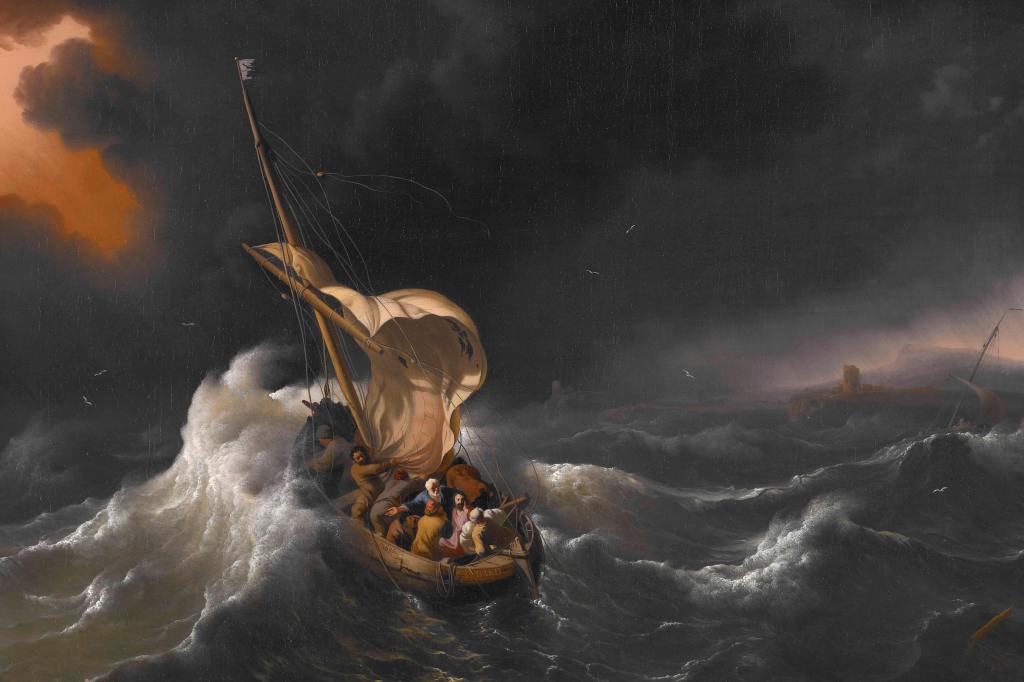
    In Mark 4:35-41, we witness yet another storm. On the evening of a day when Jesus had been teaching His disciples powerful truths about the Kingdom, He decided to put them through a practical session on faith. He said to them, “Let us cross over to the other side,” and the disciples obliged, unaware of what lay ahead. Among them were seasoned fishermen who were no strangers to the Sea of Galilee and its occasional turbulence.

    On their way across, “a huge storm came up. Waves poured into the boat, threatening to sink it” (Mark 4:37, MSG). Storms come to prepare us for ‘the other side’. God allows certain storms to shape and strengthen us for what’s next. In life, we will encounter many challenges. These challenges are meant to stretch us — to test and strengthen our capacity to overcome — and in the process, make us better. Without fire, there’s no refining. Faith must be tested, and our resolve must not waver when boisterous waves pour into our boat, threatening to sink it, because Jesus is in the stern.

    “Jesus was in the stern, head on a pillow, sleeping! They roused him, saying, ‘Teacher, is it nothing to you that we’re going down?” (Mark 4:38, MSG). They were afraid. But three things should have put them at ease:

    1. Jesus had assured them they were going to the other side (verse 35).
    2. He was with them (verse 36).
    3. He was peacefully asleep as though there was no imminent danger (verse 38) — because, as we’ll soon see, there wasn’t.

    Instead, they fixed their eyes on the waves. Faith perishes where fear thrives. And fear thrives when we focus on our turbulent circumstances instead of fastening our faith to the Rock that cannot move — Jesus. They failed the test (verse 40).

    Jesus steps in. “…He told the wind to pipe down and said to the sea, ‘Quiet! Settle down!’ The wind ran out of breath; the sea became smooth as glass.”Mark 4:39, MSG

    One of the tenets of managing obstetric emergencies like eclampsia is to call for help. At times, experience alone is not enough. Occasionally, our faith may falter. But when we call on Jesus, He will intervene. When He speaks, the billowing waves settle like glass, and not a whisper is heard from the wind. When He speaks, the storm is over!

    Let’s Pray

    Lord, quieten these storms —
    Waves of doubt threatening to flood my heart.
    Let me know You are with me.

    Lord, calm the turbulence —
    Winds of fear threatening to shake my soul.
    Let me know You are with me.

    As the boisterous sea rages around me,
    May Your unfailing Word anchor me.
    In the midst of the storm — “Peace, be still!”

    Reflections

    1. What are some examples of storms that tend to test your faith in God? What are you most afraid of?
    2. To deal with fear, you need faith. Faith comes by imbibing God’s Word.
    3. How can you keep yourself grounded in God’s Word?
    4. The essence of tests is growth. Beyond having a personal relationship with Him, God is invested in your journey — in you crossing to the other side.
    5. You are not alone, even when it feels like it. God is near.
    6. Call on Him in times of trouble — and He will answer (Psalm 50:15).
  • Who touched me?

    Who touched me?

    Scripture reading: Luke 8:40-48, NKJV

    Amid a crowd pressing against Him, Jesus feels a singular tug on the hem of His garment…

    “Who touched me?”

    Here’s Madam X—we don’t know her age—who had been suffering from an issue of blood for twelve long years. She had spent her life’s savings visiting various clinics in search of a solution, but had nothing to show for it. Her condition, one can imagine, was incredibly distressing. She desperately needed the bleeding to stop.

    Most women experience their menses once a month, and it’s unusual for it to last more than a week or exceed about 80ml a day. When it does, it’s considered abnormal and could be due to several conditions—from hormonal or clotting disorders to structural causes like fibroids or cancer. Abnormal uterine or vaginal bleeding can be deeply distressing.

    But Madam X had heard about Jesus—and she knew He could heal her. So, she made her move.

    Though considered unclean by the laws of her time and unfit to mingle with the crowd—let alone touch a holy man—she pressed on. Nothing would hold her back. Just a touch of the hem of His garment… After all, what was the worst that could happen? Who would know? Who would see? Who would feel?

    Jesus knows. Jesus sees. Jesus feels.

    Many followed Jesus that day. Many pressed against Him. But He felt only one touch. It was a touch of faith—intentional, calculated, and born from a deep, unwavering belief that He could heal her. He didn’t have to notice the touch, yet He did. He didn’t have to see her, yet He did. It was risky… but Jesus was ready.

    He knows all about your struggles—even the ones you can’t say out loud. The ones you sneak around with. The ones you’ve spent years seeking help for in all the wrong places. The ones that make you feel unclean.

    What if, today, you let go of the shame, the fear, the unworthiness—and just reached for the hem of His garment? He might just turn your life around.

    Let’s Pray

    Pray… that unlike the crowd that nonchalantly pressed in, we would truly touch Him. That our daily encounters with Him would not be routine, but intentional. That our worship would not be casual or mechanical, but full of faith, hearts brimming with desire to grasp the hem of His garment—amidst all the distractions of the world.

    That even though the world won’t notice—He will feel it.

    That as we touch the hem of His garment, as we genuinely pursue Him, as we yearn daily to draw near to Him—our struggles, our worries, our pain—will begin to fade away.

    Amen.

    Reflections

    1.  Jesus knows about you, but more than that, He wants to know you on a personal level.
    2. The “who” is not as important as the “how.”
    3. The “how” is always by faith.
    4.  Faith is not “business as usual.” Faith is intentional.
    5.  Jesus is always ready and willing.