Tag: Jesus

  • Seven Miles

    Seven Miles

    Scripture reading: Luke 24:13-35

    It had been a very busy weekend. Jesus Christ, the long-awaited Messiah, had been crucified—painfully and publicly. The one they had hoped would redeem Israel was dead.

    And then came the shocking news on Sunday morning: His tomb was empty. What could it mean?

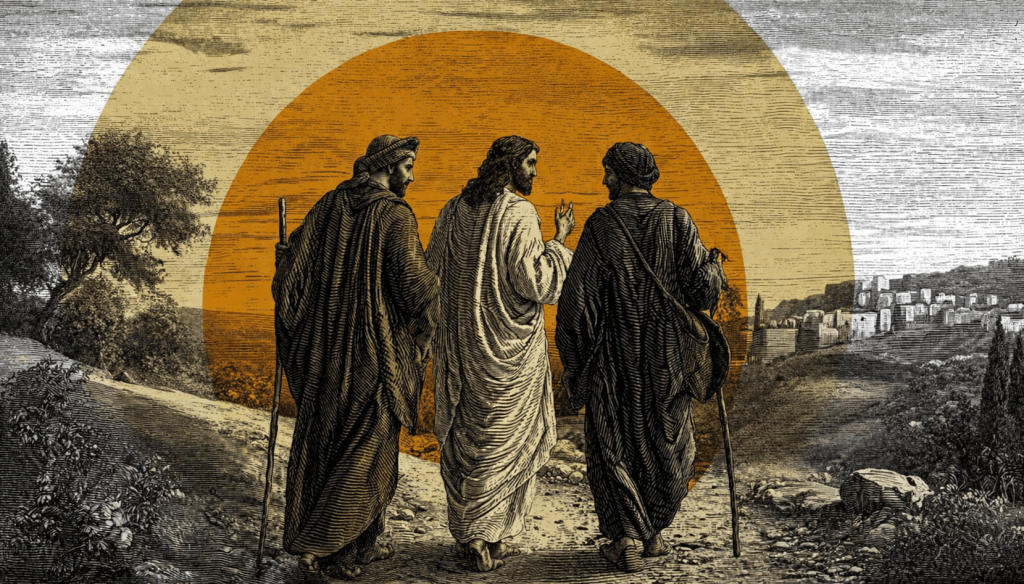
    These were the weighty matters occupying the hearts of Cleopas and his companion as they journeyed some seven miles from Jerusalem to Emmaus. These were disciples who had walked with Jesus, witnessed His works, and heard His teachings. Yet, they struggled to make sense of recent events.

    As they talked, an unexpected stranger joined them. Unrecognised, He listened as they recounted everything that had happened, even expressing surprise that He seemed unaware: “Are you the only one visiting Jerusalem who does not know the things that have happened there in these days?”

    Then came His piercing response: “How foolish you are, and how slow to believe all that the prophets have spoken!” (Luke 24:25).

    In that moment, their problem was not a lack of information; it was a lack of understanding and belief. And in the same way, we are called to examine our own doubts and spiritual blind spots.

    Did they truly know who they were talking about?

    They described Jesus as “a prophet, powerful in word and deed before God and all the people” (Luke 24:19). But He is far more than a prophet. He is God in the flesh (John 1:1, 14). No mere man has the authority to lay down his life and take it up again (John 10:17–18).

    They continued, “The chief priests and our rulers handed him over to be sentenced to death, and they crucified him” (Luke 24:20). While human hands carried out the act, this was not a tragic accident; it was for a divine purpose. As Jesus had already taught, “Did not the Messiah have to suffer these things and then enter his glory?” (Luke 24:26; see also Isaiah 53:5).

    Their disappointment is palpable: “But we had hoped that he was the one who was going to redeem Israel” (Luke 24:21). Hope, in their eyes, had died on the cross.

    Yet what they could not yet see was this: the cross was not the end. It was the pathway to victory. The resurrection changes everything. Through Christ, death has been defeated (1 Corinthians 15:54–57), sin has lost its power, and fear no longer has the final say.

    If only they could see it.

    But isn’t that often our story too? We walk weighed down by confusion and disappointment, even when the truth is right beside us.

    The journey to Emmaus became a life-changing encounter. As Jesus walked with them, explained the Scriptures, and later revealed Himself in the breaking of bread (Luke 24:30–31), their eyes were opened and their hearts set ablaze: “Were not our hearts burning within us while he talked with us on the road and opened the Scriptures to us?” (Luke 24:32).

    This is the journey we are all invited into—to walk closely with the Lord, to listen to His Word, to sit at His feet, and to commune with Him until He reveals Himself more fully to us. Beyond the surface, we are called to experience a more intimate relationship with Him.

    And here is the greatest news, still as powerful today as it was then: Jesus is alive (Matthew 28:6).

    And it only gets better from here.

    Reflection

    1. Do I truly know who Jesus Christ is?
    Like the disciples, it’s possible to walk with Jesus, hear His Word, and still misunderstand His identity. They called Him a prophet, but He is Lord and God (John 1:1, 14). Is my faith based on partial understanding, or do I fully acknowledge Him as Saviour and Lord over my life? How intimately do you know Jesus?

    2. Am I slow to believe what God has already said?
    Jesus rebuked them for being “slow to believe all that the prophets have spoken” (Luke 24:25). Their discouragement came from forgetting or misinterpreting Scripture. In moments of confusion or delay, do I trust God’s Word, or do I let doubt shape my perspective?

    3. Am I walking closely enough with Him to recognize His presence?
    The disciples didn’t recognize Jesus until He revealed Himself (Luke 24:31), but their hearts burned as He spoke. Intimacy preceded revelation. Am I creating space to walk with Him daily through Scripture, prayer, and fellowship so that I can discern His voice and presence?

    Prayer

    Lord Jesus, open my eyes to truly know You— not just in word, but in truth and power. Strengthen my faith where I doubt, and anchor my heart in Your Word. Lead me daily, that I may walk with You,
    and live in the power of Your resurrection.

    Let my heart burn for You always. Amen.

    Thank you for joining us for today’s encouragement. If this message blessed you, kindly share it with someone who may also be encouraged by it.

    Until next time, stay blessed.
  • Hosanna!

    Hosanna!

    Scripture reading: Mark 11:1-10

    The United Nations General Assembly recently voted to recognise the enslavement of Africans during the transatlantic slave trade as “the gravest crime against humanity.” The resolution, proposed by Ghana, also urged member states to consider issuing apologies and contributing to a reparations fund. Reparation is the act of making amends for a wrong by offering restitution, payment, or assistance to those who have been harmed.

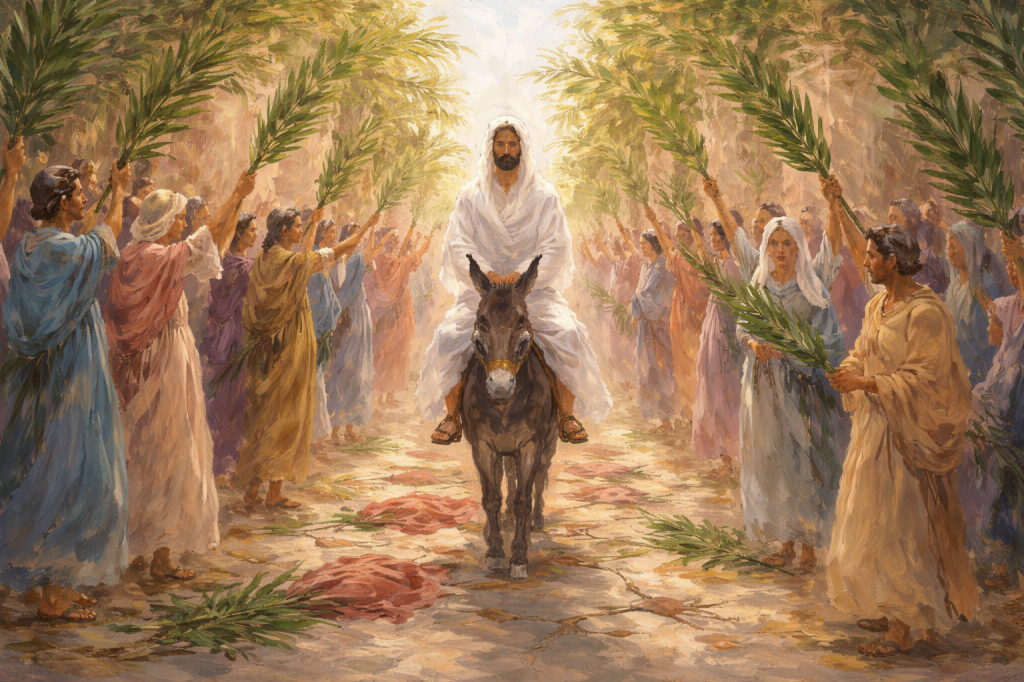
    Jesus’ final entry into Jerusalem marked the beginning of a far greater act of reparation, one that would culminate in the ultimate payment for all of humanity’s wrongs, even the gravest ones. As the crowds cried out, “Hosanna!” —  which literally means “Save us!”— they longed for a political deliverer, a conquering king who would overthrow Rome and restore their national glory. Unbeknownst to them, the true King had come, not to overthrow Rome, but to overthrow sin.

    Palm Sunday marks the beginning of His final week— a week in which He would fulfil His divine mission of liberating humanity from the bondage of sin. He rode into Jerusalem on a colt, quietly fulfilling prophecy—humble, yet purposeful. He came to bring eternal freedom, but the people were fixated on temporary relief. They saw the moment. He saw eternity.

    Are we so consumed by the troubles of today that we are losing sight of eternity?

    What began with loud praise on Sunday would end in a brutal cross on Friday. The same voices that shouted “Hosanna!” would soon cry, “Crucify Him!” The same crowd that celebrated Him would abandon Him. Triumph gave way to sacrifice; expectation collided with divine purpose.

    And then there is the colt.

    A colt that had to be loosed before it could be used.

    In much the same way, many of us are bound by fear, sin, doubt, and distraction, unable to step into God’s purposes. But when Christ takes the reins, everything changes. What is bound is loosed. What is ordinary becomes sacred. What is surrendered becomes purposeful.

    Just as He triumphantly entered Jerusalem, when we open our lives to Him, He comes not merely to visit, but to restore, to reign, and to make all things new. Hosanna, then, is not just a shout of praise; it is a surrendered prayer: “Lord, save us… Save us Your way.”

    Pause and Reflect

    1. What kind of salvation am I seeking?
    The crowd cried “Hosanna,” but their expectations were temporary.

    • Do I seek God only for immediate, visible breakthroughs?
    • Or am I open to the deeper, spiritual work He wants to do in me?
    • Am I aligned with God’s purpose, or just my expectations?

    2. What needs to be loosed in my life?
    The colt had to be released before it could be used.

    • What is holding me back—fear, sin, pride, distraction?
    • What am I still holding onto that God is asking me to surrender?
    • What must I let go of for God to fully use me?

    3. Have I truly allowed Jesus to reign?
    The people welcomed Him, but many did not accept His lordship.

    • Have I invited Jesus into every area of my life?
    • Do I follow Him only when it’s convenient, or even when it’s costly?
    • Is Jesus a guest in my life, or truly my King?

    Prayer

    Lord Jesus, I lay down my expectations and invite You to lead. Save me—not my way, but Yours. Loose every chain that holds me back— fear, sin, doubt, and distraction— and teach me to follow You in humility and trust. Reign in my heart, restore what is broken, and make my life a reflection of Your purpose.

    In Jesus’ name I pray, Amen.

    Thank you for joining us for today’s encouragement. If this message blessed you, kindly share it with someone who may also be encouraged by it.

    Until next time, stay blessed.

  • The one who came back

    The one who came back

    Scripture reading: Luke 17:11-19

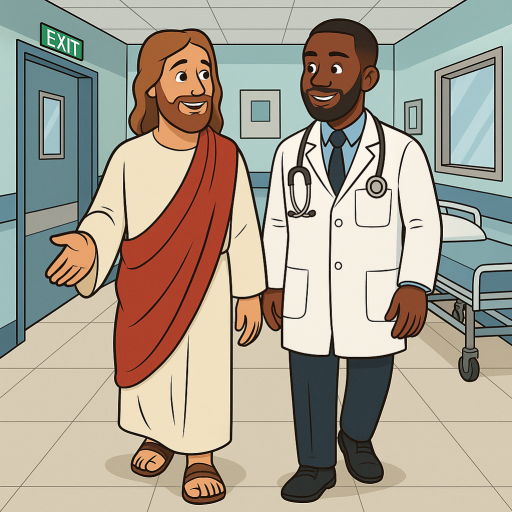
    Sometimes work becomes so overwhelming that we begin to treat our clients as though we are doing them a favour, when in reality we have been placed there to serve them. Perhaps that explains why one client returned to thank me for simply doing my job.

    I had not done anything extraordinary. I listened to her complaints, examined her, ordered a few laboratory tests to review later, and discussed what her condition might be—just as I had done for many others that day. Yet sometime later she returned simply to say, “Thank you.”

    Perhaps she appreciated the care she received, care she might not have been used to. But even if such care was expected, why hadn’t the others said thank you?

    In today’s Scripture, Jesus passes between Samaria and Galilee and enters a village where ten lepers meet Him. Standing at a distance, they cry out, “Jesus, Master, have mercy on us.” These men were helpless and hopeless. Their disease not only ravaged their bodies but also made them outcasts from society. Separated from family, community, and worship, their lives were marked by isolation and suffering.

    Moved by their plea, Jesus healed them and instructed them to go and show themselves to the priests, as required by the Law of Moses (Leviticus 13–14). The priests would examine them and declare them clean so they could return to society.

    Overjoyed, the ten men hurried off. But one stopped and turned back. While the others continued ahead, this man returned, “praising God with a loud voice; and he fell on his face at Jesus’ feet, giving Him thanks” (Luke 17:15–16).

    Even more striking, the one who returned was a Samaritan, a people many Jews despised. Jesus remarked with surprise that although ten had been healed, only one returned to give thanks and glorify God.

    Do you see yourself in the grateful leper, or among the nine who never returned?

    We often pray to ask God for what we need, and rightly so. Jesus encouraged us to ask the Father (Matthew 7:7–11). Yet we frequently move from one request to another without pausing to thank Him for what He has already done.

    The fact that you are alive today, that you are healthy, that you were able to eat, or that you woke up this morning is not accidental. These are all expressions of the grace and mercy of God. Yet when we begin to treat such blessings as expected, gratitude quietly fades.

    Jesus did not withhold healing from the nine who failed to thank Him, but He did highlight their lack of gratitude (Luke 17:18). All ten were physically healed, yet His final words to the Samaritan suggest something more: “Rise and go; your faith has made you well” (Luke 17:19).

    It seems this man received more than physical cleansing: he experienced spiritual wholeness.

    When we pause to acknowledge the Giver and not just the gifts, we honour the Lord and experience the deeper blessing that grows from a grateful heart.

    Let us pray

    1. Pray, thanking God for all he has done for you – the good and the not-so-good. 1 Thessalonians 5:8 says, in everything give thanks, for this is the will of God in Christ Jesus for you. Pray that God will give you a heart that remembers to thank Him for His daily mercies and blessings.
    2. Pray that the Lord will open your eyes to recognise His hand in both the big and the ordinary provisions of life, that He will guard your heart from becoming like the nine lepers who received blessings but never returned to give thanks.
    3. Ask that your words, attitudes, and actions will continually honour God for what He has done in your life.
    4. Pray that your faith in Christ will lead not only to receiving His gifts, but to a deeper relationship with Him and true spiritual wholeness.

    Amen.

    Thank you for joining us for today’s encouragement. If this message blessed you, kindly share it with someone who may also be encouraged by it.

    Until next time, stay blessed.

  • Immunity

    Immunity

    Scripture reading: John 8:31-36

    Immunity is the ability of the body to recognise, resist, and eliminate harmful organisms or substances such as bacteria, viruses, parasites, and toxins. In simple terms, immunity is the body’s defence system against disease. This immunity can be innate—the natural immunity one is born with—or acquired, that is, immunity that develops after exposure to a pathogen.

    Acquired immunity can be active or passive. Active immunity occurs when the body produces its own antibodies through natural infection or vaccination. An example is the immunity one gains after recovering from chickenpox. Passive immunity, on the other hand, is immunity derived from antibodies received from another source. An example is the administration of Rho(D) Immune Globulin to prevent rhesus isoimmunization, as we discussed in last week’s devotional, “Sensitisation.”

    The truth is that the Christian is not entirely immune from sin. Even after salvation, believers still struggle with sin. We will not be completely free from it until we die or until Jesus returns. Yet becoming a Christian results in a changed life (2 Corinthians 5:17). When a person accepts Jesus as Lord and Saviour, he becomes a new creation. He moves from a kingdom where, by virtue of his sinful nature, he could not help but sin, into a new domain where he is clothed with Christ. Christ becomes his righteousness. In that sense, Christ becomes his new innate immunity by virtue of the new birth.

    Instead of producing the works of the flesh (Galatians 5:19–21), the believer begins to display the fruit of the Spirit (Galatians 5:22–23), as the indwelling Holy Spirit increasingly takes control of his life. This transformation does not occur instantly, but it does occur progressively. The old nature begins to lose its dominance. The flesh begins to die.

    Along the way, the believer also develops something like acquired immunity—a growing resistance to sin. Through conscious striving, repentance, and sensitivity to the Spirit’s guidance, he learns to keep sinful acts at bay. If a person claims to believe yet shows no evidence of a changed life, it raises serious questions about the genuineness of his faith.

    And sometimes, the believer may still fall. But he does not remain in the dirt. That fall often strengthens his resolve to rise again and continue pressing forward. In that sense, each failure, met with repentance, builds a kind of active immunity against repeating the same sin.

    The difference between a sinning unbeliever and a sinning believer is this: one loves his sin, while the other hates it.

    The believer who stumbles regrets it, confesses it, and longs never to repeat it. He seeks God’s grace and power to avoid it in the future. He does not ask how much he can sin and still be considered a Christian. Rather, he asks how he can avoid even the appearance of sin.

    The believer may stumble, but he does not settle in sin. Grace lifts him, repentance cleanses him, and the Spirit strengthens him. Over time, the soul that walks with Christ becomes increasingly resistant to the very sins that once mastered it.

    Just as the body develops immunity to resist disease, the believer must develop a growing resistance to sin. The goal is not to see how close we can live to sin, but how far we can live from it. A healthy spiritual life is one that increasingly rejects what once infected it.

    To conclude, let us reflect on this question: If I truly belong to Christ, do I see evidence that my desires, attitudes, and actions are gradually being transformed?

    Let us pray. Heavenly Father, thank You for the new life we have in Christ. Help us to grow in our resistance to sin and to walk daily in the power of Your Spirit. When we stumble, grant us hearts that quickly repent and return to You. Shape our lives so that we increasingly love righteousness and hate sin. In Jesus’ name, Amen.

    Thank you for joining us for today’s encouragement. If this message blessed you, kindly share it with someone who may also be encouraged by it.

    Until next time, stay blessed.