You can listen to this devotional via Spotify or YouTube.
Artemis II, which concluded on April 11, 2026, marked a historic return to deep space. As the Orion spacecraft passed behind the Moon’s far side, communication with Earth was lost for 40 minutes.
Just before the scheduled signal interruption, Victor Glover, the pilot of the mission, shared a simple but powerful message: “We love you, from the Moon. We will see you on the other side.” Those words echo something far deeper than space exploration.
When John set out to write his Gospel, no one could have imagined that travelling around the Moon would one day be possible. Yet he was convinced of something even more extraordinary: that Jesus is God (John 1:1). The very Creator of the universe had descended to Earth on a mission to save humanity from sin (John 1:14).
That mission led Him to the cross, where He descended into death for our sake. But death was not the end. On the third day, He rose again, returning from “the other side” (John 11:25–26).
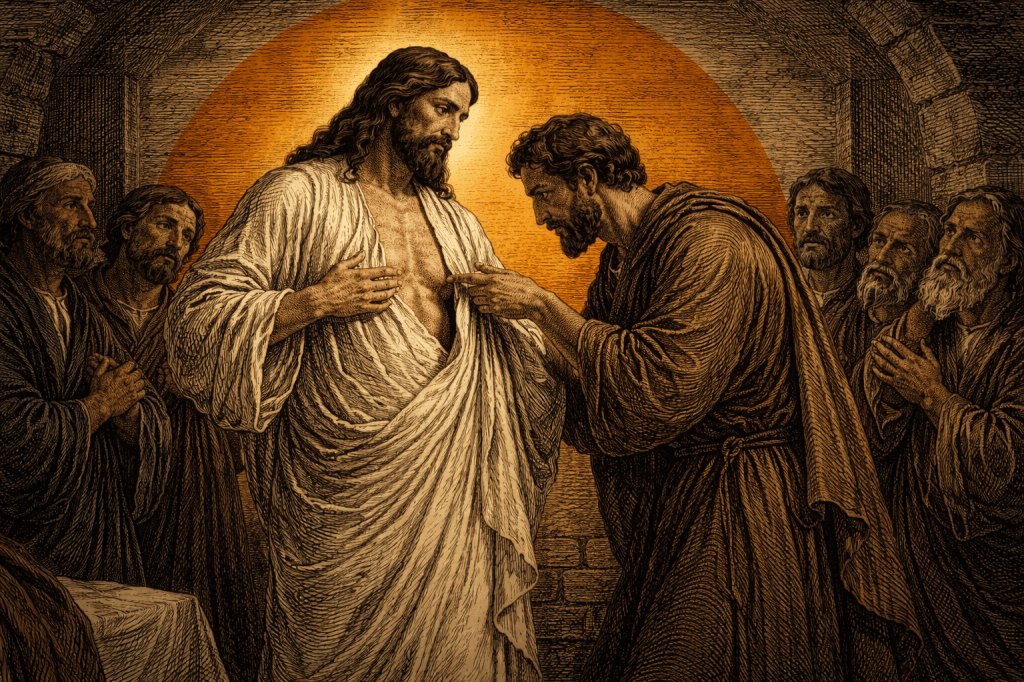
When Thomas first heard news of Jesus’ resurrection, he struggled to believe. It was too unprecedented, too impossible. No one had ever come back from the dead. He needed proof (John 20:24–25).
In grace, Jesus met him in his doubt. “Put your finger here; see my hands. Reach out your hand and put it into my side. Stop doubting and believe.” (John 20:27)
Thomas responded, “My Lord and my God!” (John 20:28). In that moment, he made one of the clearest declarations of Jesus’ divinity in the Gospels.
Jesus then spoke words that reach across time to us: “Blessed are those who have not seen and yet have believed.” (John 20:29)
Artemis II reminds us of humanity’s courage to venture into the unknown. But the resurrection of Jesus reveals something far greater—the certainty that the unknown does not have the final word. Where no one had returned before, He did. Where doubt once stood, faith now stands. And where death seemed like the end, He made it a doorway to life.
Because He lives, the “other side” is no longer something to fear, but a promise of life and unimaginable hope (1 Peter 1:3).
Prayer
Heavenly Father, thank You for sending Jesus, who stepped into our world and went even to the depths of death for us. Thank You that He did not remain there but rose again in victory.
Lord, in moments when life feels uncertain, and I cannot see what lies ahead, help me to trust You. Strengthen my faith where there is doubt, and remind me that You are already present in every “unknown” I face.
Because Jesus lives, fill my heart with hope and courage. Help me to hold on to the promise of life on the other side.
In Jesus’ name, Amen.
Thank you for joining us for today’s encouragement. If this message blessed you, kindly share it with someone who may also be encouraged by it.
You can listen to this devotional via Spotify or YouTube.
It had been a very busy weekend. Jesus Christ, the long-awaited Messiah, had been crucified—painfully and publicly. The one they had hoped would redeem Israel was dead.
And then came the shocking news on Sunday morning: His tomb was empty. What could it mean?
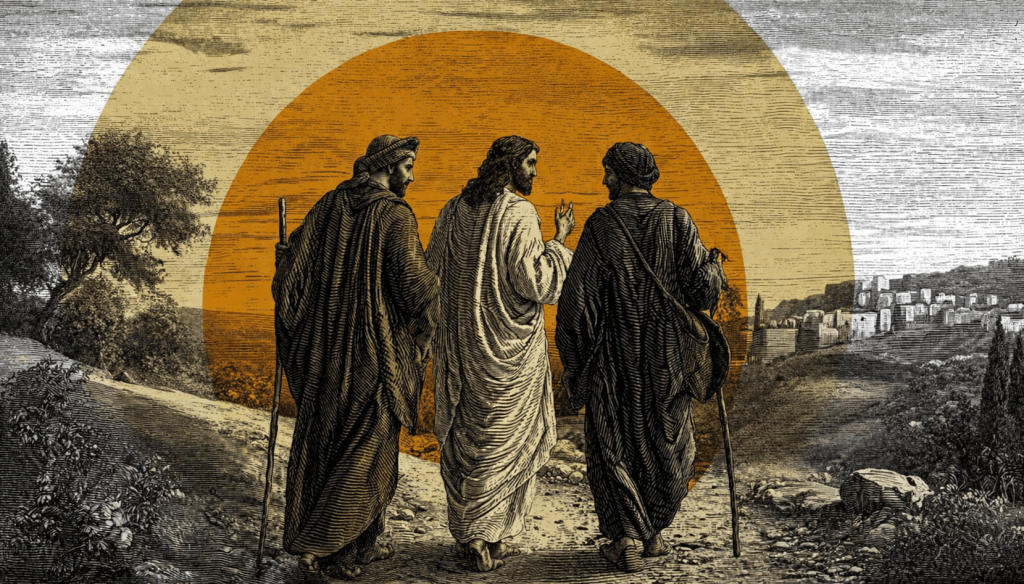
These were the weighty matters occupying the hearts of Cleopas and his companion as they journeyed some seven miles from Jerusalem to Emmaus. These were disciples who had walked with Jesus, witnessed His works, and heard His teachings. Yet, they struggled to make sense of recent events.
As they talked, an unexpected stranger joined them. Unrecognised, He listened as they recounted everything that had happened, even expressing surprise that He seemed unaware: “Are you the only one visiting Jerusalem who does not know the things that have happened there in these days?”
Then came His piercing response: “How foolish you are, and how slow to believe all that the prophets have spoken!” (Luke 24:25).
In that moment, their problem was not a lack of information; it was a lack of understanding and belief. And in the same way, we are called to examine our own doubts and spiritual blind spots.
Did they truly know who they were talking about?
They described Jesus as “a prophet, powerful in word and deed before God and all the people” (Luke 24:19). But He is far more than a prophet. He is God in the flesh (John 1:1, 14). No mere man has the authority to lay down his life and take it up again (John 10:17–18).
They continued, “The chief priests and our rulers handed him over to be sentenced to death, and they crucified him” (Luke 24:20). While human hands carried out the act, this was not a tragic accident; it was for a divine purpose. As Jesus had already taught, “Did not the Messiah have to suffer these things and then enter his glory?” (Luke 24:26; see also Isaiah 53:5).
Their disappointment is palpable: “But we had hoped that he was the one who was going to redeem Israel” (Luke 24:21). Hope, in their eyes, had died on the cross.
Yet what they could not yet see was this: the cross was not the end. It was the pathway to victory. The resurrection changes everything. Through Christ, death has been defeated (1 Corinthians 15:54–57), sin has lost its power, and fear no longer has the final say.
If only they could see it.
But isn’t that often our story too? We walk weighed down by confusion and disappointment, even when the truth is right beside us.
The journey to Emmaus became a life-changing encounter. As Jesus walked with them, explained the Scriptures, and later revealed Himself in the breaking of bread (Luke 24:30–31), their eyes were opened and their hearts set ablaze: “Were not our hearts burning within us while he talked with us on the road and opened the Scriptures to us?” (Luke 24:32).
This is the journey we are all invited into—to walk closely with the Lord, to listen to His Word, to sit at His feet, and to commune with Him until He reveals Himself more fully to us. Beyond the surface, we are called to experience a more intimate relationship with Him.
And here is the greatest news, still as powerful today as it was then: Jesus is alive (Matthew 28:6).
And it only gets better from here.
Reflection
1. Do I truly know who Jesus Christ is? Like the disciples, it’s possible to walk with Jesus, hear His Word, and still misunderstand His identity. They called Him a prophet, but He is Lord and God (John 1:1, 14). Is my faith based on partial understanding, or do I fully acknowledge Him as Saviour and Lord over my life? How intimately do you know Jesus?
2. Am I slow to believe what God has already said? Jesus rebuked them for being “slow to believe all that the prophets have spoken” (Luke 24:25). Their discouragement came from forgetting or misinterpreting Scripture. In moments of confusion or delay, do I trust God’s Word, or do I let doubt shape my perspective?
3. Am I walking closely enough with Him to recognize His presence? The disciples didn’t recognize Jesus until He revealed Himself (Luke 24:31), but their hearts burned as He spoke. Intimacy preceded revelation. Am I creating space to walk with Him daily through Scripture, prayer, and fellowship so that I can discern His voice and presence?
Prayer
Lord Jesus, open my eyes to truly know You— not just in word, but in truth and power. Strengthen my faith where I doubt, and anchor my heart in Your Word. Lead me daily, that I may walk with You, and live in the power of Your resurrection.
Let my heart burn for You always. Amen.
Thank you for joining us for today’s encouragement. If this message blessed you, kindly share it with someone who may also be encouraged by it.
You can listen to this devotional via Spotify or YouTube.
Viral infections are known to be highly contagious. Once an infection is established, it can spread through direct contact, through the air, on surfaces, via carriers, or even from mother to child. One infected person can transmit it to many, who in turn transmit it further. What begins with a single host can expand exponentially across communities, cities, and nations. The recent COVID-19 pandemic is a clear case in point. What started in one location quickly spread across the globe, affecting millions.
In the digital world, “viral” content spreads in a similar way. On platforms like TikTok or YouTube, one person shares a video or post, others repost it, and networks multiply it rapidly. Algorithms amplify their reach, and soon it is everywhere.
Virality, whether biological or digital, follows a simple pattern: contact leads to multiplication, and subsequently expansion.
In Matthew 28:19–20, Jesus gave His disciples this charge: “Go therefore and make disciples of all nations…” It was, in essence, a command to make the Gospel spread to the ends of the earth. Not long afterwards, empowered by the Holy Spirit (Acts 1:8), the Gospel began to spread rapidly. By the time we read Acts of the Apostles 17:6, critics were saying: “These men who have turned the world upside down have come here also.” The message spread so widely that it unsettled the Roman world. Many believers paid for it with their lives. Yet they could not remain silent. The message was too good, and everyone needed to hear it.
The Gospel literally means “good news.” It is the message of God’s love and redemption through Jesus Christ. The Gospel announces that: Humanity was separated from God because of sin (Romans 3:23), God provided a way back through Jesus Christ, who lived perfectly, died for our sins, and rose again (1 Corinthians 15:3–4), Whoever believes in Him receives forgiveness, new life, and eternal life (John 3:16; 2 Corinthians 5:17), and this new life transforms character, relationships, and purpose (Ezekiel 36:26; Galatians 5:22–23).
The Gospel is not merely moral advice or a religious story. It is “the power of God for salvation” (Romans 1:16). It is the ultimate life-giving contagion because it strengthens, restores, and multiplies in ways nothing else can.
If today a cure for HIV/AIDS were discovered, that news would spread instantly across the globe. The Gospel proclaims the cure for sin. It announces deliverance from eternal separation from God (John 5:24). Everybody needs to hear it. Every true Christian is called to share it.
How to we Spread This Holy Contagion
1. Abide in Christ
Jesus revealed the foundation in Gospel of John 15:4–5:
“Abide in me… Whoever abides in me and I in him, he it is that bears much fruit.”
Abiding produces fruit. Fruit carries seed. Seed multiplies life.
Spend time in prayer (1 Thessalonians 5:17), in Scripture (2 Timothy 3:16–17), and in worship. Let your relationship with Christ shape your every word and action.
2. Live a Fruitful Life
The fruit of the Spirit — love, joy, peace, patience, kindness, goodness, faithfulness, gentleness, and self-control — is listed in Galatians 5:22–23.
Let others see Christ in your conduct before they hear Him in your words (Matthew 5:16). A transformed life is compelling evidence of a transforming Saviour.
3. Share Your Testimony Naturally
“You will be my witnesses” (Acts 1:8).
Speak about what Christ has done in your life. Share your struggles, victories, and growth. A witness simply tells what they have seen and experienced.
4. Engage Your Networks
Viruses often spread from an epicenter. In the early church, that center was Jerusalem (Acts 1:8). Start with your immediate circle — family, friends, colleagues, church, and online communities — and allow the message to multiply relationally.
5. Use Every Platform Faithfully
No avenue is insignificant. Whether through social media, small groups, writing, music, or conversation, share Scripture and encouragement (Colossians 4:6).
6. Pray for opportunities and Open Doors
Paul asked believers to pray “that God may open to us a door for the word” (Colossians 4:3). Ask God to prepare hearts and to make your witness fruitful.
7. Teach and Disciple
The command was not merely to make converts, but disciples (Matthew 28:19–20). Guide others to grow. A disciple who bears fruit becomes a multiplier (2 Timothy 2:2).
A Sobering Reminder
Recently, reports indicated that a popular actor, Eric Dane, died from Amyotrophic lateral sclerosis. In his interview on Netflix, it was painfully evident how severely the disease had taken its toll on him.
In Amyotrophic lateral sclerosis (ALS), motor neurons slowly degenerate and die. As they stop sending signals to the muscles, the body weakens, deteriorates, and eventually loses vital functions.
Sin operates in a far deeper way. “The wages of sin is death” (Romans 6:23). Left untreated, it cripples and ultimately destroys.
The Gospel proclaims the cure for sin, and it remains truly “good news” only if it reaches its hearers in time. The longer it is withheld, the more firmly sin entrenches itself. If you possessed the cure, would you keep it to yourself, or would you share it?
Questions to Reflect On
If someone spent a week near me, what would they “catch”?
Am I abiding deeply enough for fruit to form?
Does my witness flow from transformation or obligation?
Am I intentionally using my networks to spread life?
Let us pray
Lord Jesus, Abide in me as I abide in You. Let Your life take root so deeply that fruit becomes inevitable.
Make my love visible. Make my peace steady. Make my witness natural. Make my life a channel of Your transforming power.
Help me share the Gospel through words, actions, and presence, so that Your life spreads, multiplies, and bears eternal fruit.
On the morning of Wednesday, August 6, a Ghanaian Z-9 Air Force helicopter took off from Accra toward Obuasi. Among the eight on board were Defence Minister Edward Omane Boamah, Environment Minister Ibrahim Murtala Muhammed, Samuel Sarpong (vice-chair of the ruling party), Muniru Mohammed (top national security adviser), and others. None of them could have anticipated that their journey would end in a deadly crash.
Life can change in a heartbeat. Scripture reminds us that this is also how the return of Christ will be. In today’s passage, Jesus speaks of His second coming, likening it to the days of Noah when people were going about their daily lives until the flood came unexpectedly.
“Watch therefore, for you do not know what hour your Lord is coming… Therefore you also be ready, for the Son of Man is coming at an hour you do not expect.”
Just as no one knows when disaster might strike, no one knows the day or hour of Christ’s return. The call is clear: live ready.
Reflection
What does “being ready” for Christ’s return look like in your daily life?
Are there habits or attitudes you would change if you knew Jesus was coming tomorrow?
How can you cultivate a lifestyle of watchfulness and prayer?
Are you clinging to temporary things or eternal ones?
Who around you still needs to hear the message of salvation before it’s too late?
Let us pray
Lord, teach me to number my days and live in readiness for Your return. Help me not to be distracted by the fleeting pleasures of this world, but to be found faithful and watchful when You come. Amen.


 On Rounds with Jesus