Tag: Holy Spirit

  • Immunity

    Immunity

    Scripture reading: John 8:31-36

    Immunity is the ability of the body to recognise, resist, and eliminate harmful organisms or substances such as bacteria, viruses, parasites, and toxins. In simple terms, immunity is the body’s defence system against disease. This immunity can be innate—the natural immunity one is born with—or acquired, that is, immunity that develops after exposure to a pathogen.

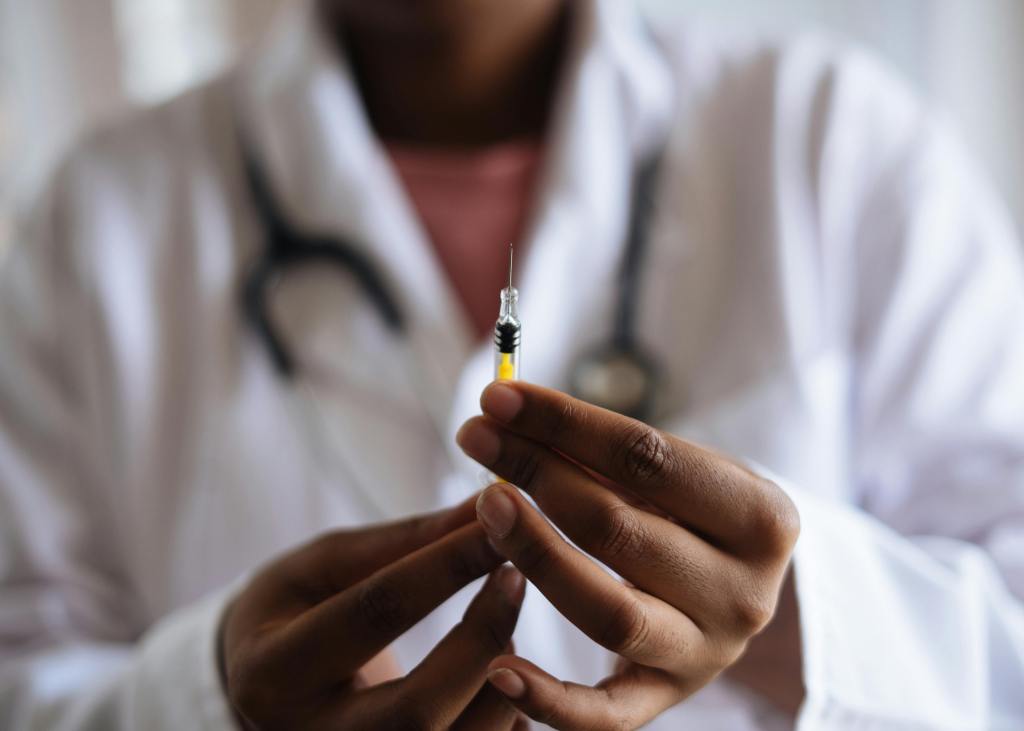
    Acquired immunity can be active or passive. Active immunity occurs when the body produces its own antibodies through natural infection or vaccination. An example is the immunity one gains after recovering from chickenpox. Passive immunity, on the other hand, is immunity derived from antibodies received from another source. An example is the administration of Rho(D) Immune Globulin to prevent rhesus isoimmunization, as we discussed in last week’s devotional, “Sensitisation.”

    The truth is that the Christian is not entirely immune from sin. Even after salvation, believers still struggle with sin. We will not be completely free from it until we die or until Jesus returns. Yet becoming a Christian results in a changed life (2 Corinthians 5:17). When a person accepts Jesus as Lord and Saviour, he becomes a new creation. He moves from a kingdom where, by virtue of his sinful nature, he could not help but sin, into a new domain where he is clothed with Christ. Christ becomes his righteousness. In that sense, Christ becomes his new innate immunity by virtue of the new birth.

    Instead of producing the works of the flesh (Galatians 5:19–21), the believer begins to display the fruit of the Spirit (Galatians 5:22–23), as the indwelling Holy Spirit increasingly takes control of his life. This transformation does not occur instantly, but it does occur progressively. The old nature begins to lose its dominance. The flesh begins to die.

    Along the way, the believer also develops something like acquired immunity—a growing resistance to sin. Through conscious striving, repentance, and sensitivity to the Spirit’s guidance, he learns to keep sinful acts at bay. If a person claims to believe yet shows no evidence of a changed life, it raises serious questions about the genuineness of his faith.

    And sometimes, the believer may still fall. But he does not remain in the dirt. That fall often strengthens his resolve to rise again and continue pressing forward. In that sense, each failure, met with repentance, builds a kind of active immunity against repeating the same sin.

    The difference between a sinning unbeliever and a sinning believer is this: one loves his sin, while the other hates it.

    The believer who stumbles regrets it, confesses it, and longs never to repeat it. He seeks God’s grace and power to avoid it in the future. He does not ask how much he can sin and still be considered a Christian. Rather, he asks how he can avoid even the appearance of sin.

    The believer may stumble, but he does not settle in sin. Grace lifts him, repentance cleanses him, and the Spirit strengthens him. Over time, the soul that walks with Christ becomes increasingly resistant to the very sins that once mastered it.

    Just as the body develops immunity to resist disease, the believer must develop a growing resistance to sin. The goal is not to see how close we can live to sin, but how far we can live from it. A healthy spiritual life is one that increasingly rejects what once infected it.

    To conclude, let us reflect on this question: If I truly belong to Christ, do I see evidence that my desires, attitudes, and actions are gradually being transformed?

    Let us pray. Heavenly Father, thank You for the new life we have in Christ. Help us to grow in our resistance to sin and to walk daily in the power of Your Spirit. When we stumble, grant us hearts that quickly repent and return to You. Shape our lives so that we increasingly love righteousness and hate sin. In Jesus’ name, Amen.

    Thank you for joining us for today’s encouragement. If this message blessed you, kindly share it with someone who may also be encouraged by it.

    Until next time, stay blessed.

  • Reborn

    Reborn

    Scripture reading: John 3:1-8, Galatians 5:19-23

    At conception, special cells carrying half of the genetic information from each parent fuse in a process called fertilization. This marks the beginning of a nine-month journey that culminates in the birth of a baby. At birth, that child already carries inherited features that will gradually find expression in the way they look, speak, and even behave. Genes make this possible. They shape how the body looks and how it functions.

    Sometimes, however, the genes a person inherits may also predispose them to disease. In the past, there was very little that could be done about genetic conditions such as sickle cell disease, where red blood cells become abnormally shaped under stress, leading to pain and complications. Today, advances in medical science offer new hope. Through gene-editing technology, it is now possible to modify a patient’s own blood stem cells to produce high levels of fetal haemoglobin, preventing red blood cells from sickling. By restoring healthy oxygen flow, this innovation offers the possibility of a one-time, transformative treatment without the need for donor transplants.

    Spiritually speaking, humanity also carries an inherited condition. By default, we are sinful. It is our nature, something we are born into. When Jesus said, “Unless one is born again, he cannot see the kingdom of God,” He was revealing that entry into God’s righteous domain is not possible while we remain in our natural state. We require a complete inner renewal – a spiritual re-engineering.

    This renewal comes through faith in the saving work of Jesus Christ on Calvary’s cross. We are not called to return physically to the womb, as Nicodemus imagined, but to experience a new birth, one that transforms our very nature.

    When we believe, God places His Spirit within us. From that moment, a hidden work begins, much like the unseen development of a child in the womb. Quietly and gradually, the Spirit reshapes us into the likeness of Christ. This process takes time. And its outcome becomes visible in what Scripture calls the fruit of the Spirit: love, joy, peace, patience, kindness, goodness, faithfulness, gentleness, and self-control.

    Just as a mother does not consciously assemble the organs of her growing baby, spiritual fruit is not produced by sheer human effort. The mother’s role is to nurture the environment, to eat well, avoid harmful substances, and attend regular care. Likewise, our role is not to manufacture transformation, but to cooperate with it.

    Spiritual growth comes through yielding to the Holy Spirit, through daily surrender, prayer, Scripture, and sensitivity to His leading. As we align our hearts with God’s will, He works within us, shaping our character from the inside out. Yet we must remain willing participants. Though the work is God’s, we can resist or hinder it through sin, neglect, or indifference.

    Ask any pregnant woman – carrying new life is not always comfortable. There are cravings that are not necessarily healthy, sacrifices to be made and moments of strain. But in the end, the joy of new life makes the journey worthwhile. So it is with spiritual growth.

    As we trust God’s Spirit to work in us, both to will and to do according to His good pleasure, we can be confident that the character He is forming within us will prepare us for our place in His Kingdom.

    Reflections

    1. In what areas of my life am I still relying on self-effort instead of yielding to the transforming work of the Holy Spirit?
    2. What habits, attitudes, or “old nature” patterns might be resisting God’s regenerating work within me?
    3. How can I intentionally create space for the Spirit’s hidden work in my daily life through surrender, prayer, and obedience?

    Let us Pray

    Heavenly Father,

    Thank You for offering me new life through Christ.

    Holy Spirit, shape me quietly from within. Teach me to yield, to trust, and to rest in Your transforming grace.

    Let Your life grow in me until I reflect Your love, Your peace, and Your likeness.

    In Jesus’ name,
    Amen.