
Tag: Gospel Reflection

  • Homeostasis

    Homeostasis

    Scripture reading: Matthew 5:13-16

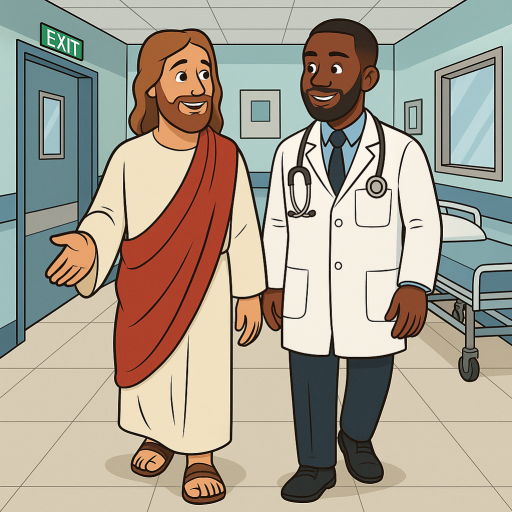
    Homeostasis is the body’s capacity to maintain a stable internal environment despite constant internal and external change. Cells can only function properly within carefully regulated conditions. When these limits are breached, enzymes fail, membranes break down, and vital processes are disrupted. Many diseases reflect a breakdown of homeostasis, and medicine, at its core, seeks to restore or support this delicate balance.

    In today’s passage, Jesus introduces two elements without which life itself quickly deteriorates: salt and light. He uses these necessities to describe the indispensable role we, as His followers, are meant to play in the world.

    “You are the salt of the earth,” He says. Salt is simple, yet its absence is immediately noticeable. Its ability to enhance flavour is unmatched, and its role in preventing decay is well established. In the human body, salt is central to homeostasis. It is essential in regulating body fluid balance, nerve conduction, muscle activity, and circulation. In moments of life-threatening shock, a simple infusion of saline can mean the difference between life and death. Ordinary salt. Through this image, Jesus calls us to preserve moral and spiritual balance, to resist corruption, to restore the lost, and to reconcile people to Him. We are meant to influence society through Christ, not be shaped by it.

    But He adds a warning: “If the salt loses its flavour, how shall it be seasoned?” When those meant to influence lose their distinctiveness and become the ones being influenced, their effectiveness is lost. Loss of identity leads inevitably to loss of impact.

    Jesus then declares, “You are the light of the world.” Life cannot flourish without light. Plants depend on it for growth; without it, nothing can be seen. Light brings visibility, direction, and clarity. In a world growing ever darker, Christ calls us to be a visible beacon of hope, like a lighthouse, guiding the lost home. A hidden light fails its purpose; influence must be seen to be effective.

    The remarkable truth about both salt and light is that only a small amount is needed to make a real difference. Today’s encouragement is a simple but demanding call: brighten the corner where you are. Let your light shine before others, so that they may see your good works and glorify your Father in heaven.

    Homeostasis is about balance, not compromise; distinction, not dilution. We are called to preserve, not decay; to illuminate, not eclipse. We are called to live as worthy ambassadors of Christ wherever we are (2 Corinthians 5:20).

    Reflections

    1. Where has God placed me right now, and in what specific ways am I actively preserving what is good rather than merely avoiding what is bad?

    2. In what areas have I begun to lose my distinctiveness as a follower of Christ, and how has that affected my influence?

    3. Who around me is living in confusion, decay, or darkness, and what visible, loving action can I take this week to point them toward Christ?

    Let us Pray

    Lord Jesus, You have called me salt and light, yet I confess how easily I lose my distinctiveness. Restore in me what compromise has dulled and what fear has hidden. Where my presence has been silent, make it preserving. Where my light has been dim, let it shine again.

    Teach me to hold the balance You designed, not blending into decay, not withdrawing from need, but standing quietly faithful. Use my words, my choices, and even my stillness to point others to You. Let my life bring healing, clarity, and hope, so that in every place I stand, You are seen and glorified.

    Amen.

  • Newton’s Second Law

    Newton’s Second Law

    Scripture readings: Matthew 4:18 – 22; Mark 10:17 – 22

    Last week, we explored spiritual inertia, the tendency to stay at rest or continue in the same direction unless acted upon by an external force. Many of us experience a sense of spiritual “stuckness,” feeling unable to move toward God’s purpose even when we know His will.

    Newton’s Second Law of Motion teaches that acceleration is produced by a force acting on mass. The greater the mass, the more resistance to movement. Growth is not limited by the strength of God’s call, but by the weight we carry when responding to it.

    Jesus’ invitation in the Gospels is clear and consistent: “Follow me.”  (Matthew 4:19). This call is decisive, directional, and full of authority. Yet not all respond equally. Some accelerate immediately, like Peter, Andrew, James, and John, who left their nets at once. Others, like the rich young ruler, hesitated and walked away. Same call. Different weights. (Mark 10:17–22)

    Think of a shopping cart. An empty cart moves easily with a gentle push. Fill it with heavy groceries, and the same push produces little movement. Spiritually, the cart is our heart, the groceries are our fears, pride, and distractions, and God’s call is the push. Until we unload these weights, acceleration toward God is slow.

    Hebrews 12:1 reminds us: “Let us throw off everything that hinders and the sin that so easily entangles.” Weight slows motion. Release it. Fix your eyes on Jesus, and acceleration follows. Hebrews 12:2 urges: “Let us fix our eyes on Jesus, the pioneer and perfecter of faith.” Direction. When we lay off the weight, and accelerate in the direction of His call, we gain true spiritual momentum.

    Reflection Questions

    1. What weight is slowing your movement toward Jesus?
    2. How would obedience look if you released that weight today?
    3. Are you keeping your eyes fixed on Jesus, or are distractions pulling your direction off-course?

    Prayer

    Lord Jesus,
    You call me to follow with clarity and love.
    Forgive me for the weight I carry that slows my obedience
    Teach me to lay aside what hinders, fix my eyes fully on You, and move immediately when You speak.
    Strengthen my heart to release all that resists Your call.
    Amen.

    Closing Thoughts

    Acceleration is possible, but only when we release what slows us and move in the direction of Christ. God’s call is strong enough. The path is clear. The question is: are you willing to let go, and move?

  • Inertia

    Inertia

    Scripture reading: Luke 9:57–62

    In physics, inertia is the tendency of an object to resist change, to stay at rest or keep moving in the same direction unless acted upon by an external force. Spiritually, inertia looks like knowing what God asks of us, yet remaining unmoved. We believe, but delay. We agree, but do not act. Faith stalls when comfort becomes stronger than conviction.

    Jesus confronts spiritual inertia directly in this week’s reading. In Luke 9, several people express willingness to follow Him, but always with delay. One wants to first bury his father. Another wants to say goodbye at home. None of these requests sounds sinful per se, yet Jesus responds with striking urgency: “No one who puts a hand to the plow and looks back is fit for service in the kingdom of God.”

    Their problem was not refusal, but hesitation. They felt the pull of comfort, tradition, and unfinished business. Like many of us, they intended to follow, but not immediately.

    Spiritual inertia often disguises itself as responsibility or timing. We tell ourselves we will obey once things settle down, once we feel ready, once life is less demanding. But Jesus calls for movement now. The kingdom advances through responsive hearts, not postponed ones.

    God’s grace is the force that breaks inertia. His Spirit empowers us to move, but obedience must meet that grace. When we respond, even imperfectly, momentum begins, and God’s power carries us forward. Like a parked car on a hill, it takes effort to start pushing it, but once it moves, even a gentle push keeps it rolling. Obedience works the same way. The first step is often the hardest. Yet that step invites God’s power to carry us forward.

    This year, your charge is to move – take that first step in faith!

    Reflection

    • Where have you grown comfortable instead of obedient?
    • What instruction from God have you delayed acting on?
    • What one small step can you take today to break spiritual inertia?

    Do not wait for perfect motivation. Act on present obedience.

    Prayer

    Lord, I confess the places where I have grown still when You called me to move. Break every spiritual inertia in my heart. Give me courage to obey promptly and faith to trust You with the outcome. Let Your Spirit be the force that moves me from intention to action. Amen.

    Closing Thought

    Faith that moves, even slowly, pleases God more than faith that only agrees. Today, choose movement. Even a step matters.