

Tag: Fruit of the Spirit

  • Reborn

    Reborn

    Scripture reading: John 3:1-8, Galatians 5:19-23

    At conception, special cells carrying half of the genetic information from each parent fuse in a process called fertilization. This marks the beginning of a nine-month journey that culminates in the birth of a baby. At birth, that child already carries inherited features that will gradually find expression in the way they look, speak, and even behave. Genes make this possible. They shape how the body looks and how it functions.

    Sometimes, however, the genes a person inherits may also predispose them to disease. In the past, there was very little that could be done about genetic conditions such as sickle cell disease, where red blood cells become abnormally shaped under stress, leading to pain and complications. Today, advances in medical science offer new hope. Through gene-editing technology, it is now possible to modify a patient’s own blood stem cells to produce high levels of fetal haemoglobin, preventing red blood cells from sickling. By restoring healthy oxygen flow, this innovation offers the possibility of a one-time, transformative treatment without the need for donor transplants.

    Spiritually speaking, humanity also carries an inherited condition. By default, we are sinful. It is our nature, something we are born into. When Jesus said, “Unless one is born again, he cannot see the kingdom of God,” He was revealing that entry into God’s righteous domain is not possible while we remain in our natural state. We require a complete inner renewal – a spiritual re-engineering.

    This renewal comes through faith in the saving work of Jesus Christ on Calvary’s cross. We are not called to return physically to the womb, as Nicodemus imagined, but to experience a new birth, one that transforms our very nature.

    When we believe, God places His Spirit within us. From that moment, a hidden work begins, much like the unseen development of a child in the womb. Quietly and gradually, the Spirit reshapes us into the likeness of Christ. This process takes time. And its outcome becomes visible in what Scripture calls the fruit of the Spirit: love, joy, peace, patience, kindness, goodness, faithfulness, gentleness, and self-control.

    Just as a mother does not consciously assemble the organs of her growing baby, spiritual fruit is not produced by sheer human effort. The mother’s role is to nurture the environment, to eat well, avoid harmful substances, and attend regular care. Likewise, our role is not to manufacture transformation, but to cooperate with it.

    Spiritual growth comes through yielding to the Holy Spirit, through daily surrender, prayer, Scripture, and sensitivity to His leading. As we align our hearts with God’s will, He works within us, shaping our character from the inside out. Yet we must remain willing participants. Though the work is God’s, we can resist or hinder it through sin, neglect, or indifference.

    Ask any pregnant woman – carrying new life is not always comfortable. There are cravings that are not necessarily healthy, sacrifices to be made and moments of strain. But in the end, the joy of new life makes the journey worthwhile. So it is with spiritual growth.

    As we trust God’s Spirit to work in us, both to will and to do according to His good pleasure, we can be confident that the character He is forming within us will prepare us for our place in His Kingdom.

    Reflections

    1. In what areas of my life am I still relying on self-effort instead of yielding to the transforming work of the Holy Spirit?
    2. What habits, attitudes, or “old nature” patterns might be resisting God’s regenerating work within me?
    3. How can I intentionally create space for the Spirit’s hidden work in my daily life through surrender, prayer, and obedience?

    Let us Pray

    Heavenly Father,

    Thank You for offering me new life through Christ.

    Holy Spirit, shape me quietly from within. Teach me to yield, to trust, and to rest in Your transforming grace.

    Let Your life grow in me until I reflect Your love, Your peace, and Your likeness.

    In Jesus’ name,
    Amen.
  • Vital Signs

    Vital Signs

    Scripture reading: Mark 11:12-14, Luke 13:6-9

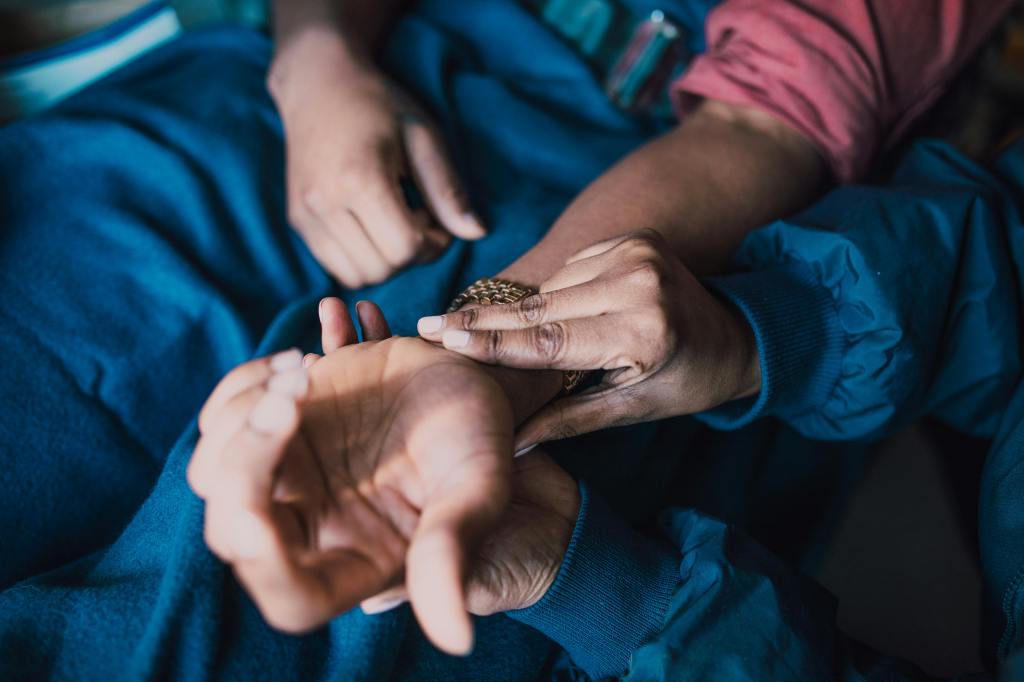
    Have you ever visited a clinic where a healthcare professional checks your temperature, pulse, blood pressure, or respiratory rate? Ever wondered why? These measurements are called vital signs, basic indicators that reveal how well your body’s essential systems are functioning. Think of them as the body’s quick status check: the warning lights on a car’s dashboard, or even your bank balance, if you catch my drift.

    In today’s reading from Mark, we encounter Jesus performing a quick “status check” of His own, on a fig tree. He was hungry and saw the tree from a distance. It had leaves. That was promising.
    When a fig tree has leaves, fruit should follow. Jesus knew this. It was expected. The vital signs pointed to a healthy, fruitful tree. Yet when He approached the tree, He found nothing. No fruit. Only leaves. How disappointing!

    Luke records a similar moment in the parable of the barren fig tree. The owner of the vineyard, God, comes expecting fruit from His tree: us. He expects it. And rightly so. Considering the immense investment of His only begotten Son, Jesus, the keeper of the vineyard, who tends, nourishes, and intercedes for us, how could He expect anything less?

    The owner says to the keeper of the vineyard, “Look, for three years I have come seeking fruit on this fig tree and find none. Cut it down; why should it use up the ground?”

    But the vinedresser pleads, “Sir, let it alone this year also, until I dig around it and fertilize it. And if it bears fruit, well. But if not, after that you can cut it down.”

    The question presses itself upon us: Are we bearing fruit?

    Fruition is the natural outcome of a branch’s connection to the vine (John 15:4–5). Fruit does not come from striving, but from abiding. The presence, or absence, of fruit is a vital sign that reveals the health of our relationship with God. Are we bearing fruit?

    Fruit is what the world experiences when it encounters us. It is the visible result of the inward work of the Holy Spirit (Galatians 5:22–23): love, joy, peace, patience, kindness, goodness, faithfulness, gentleness, and self-control. Are we bearing fruit?

    Fruit is the quiet but irresistible light your good deeds give off, the savour of Christ your life exudes, causing others to glorify God (Matthew 5:16). Are we bearing fruit?

    Biologically, fruits exist to carry seeds to ensure continuation and multiplication, even under harsh conditions. Spiritually, fruit looks like witness and disciple-making: lives transformed and faith reproduced (Matthew 28:19–20). Are we bearing fruit?

    One remarkable thing about fig trees is that they advertise their fruit by producing leaves. Which leads to a sobering question: if we profess Christ, what evidence do we offer to support that claim?

    In today’s scripture, we find Jesus’ heart-warming plea when the owner of the vineyard asked for the unfruitful tree to be cut down: “Sir, let it alone this year … until I dig around it and fertilize it…”

    This is mercy. But it is mercy with an expectation. Jesus has allowed us the opportunity and mercy of the present to get things right: to abide closely, love Him more dearly and follow Him more nearly. Christ’s sacrifice must count for something!

    “That [we] may walk worthy of the Lord, fully pleasing Him, being fruitful in every good work and increasing in the knowledge of God” (Colossians 1:10).

    Let us pray

    Father,
    We come before You with open hearts and unguarded lives.
    You see us as we truly are, beyond appearances, beyond leaves and language.
    You search for fruit.

    Lord, we confess that there are seasons when we look alive,
    yet inwardly we have grown barren.
    We have mastered the form, but neglected the flow.
    We have worn the leaves, but withheld the fruit.

    Thank You for Your patience.
    Thank You for the mercy that digs around our roots,
    for the grace that fertilizes tired soil,
    for the Son who intercedes when judgment feels deserved.

    Teach us to abide in You,
    To remain close to You, the true Vine.
    Let Your Spirit work deeply within us,
    producing love where there was indifference,
    peace where there was restlessness,
    and obedience where there was resistance.

    Make our lives a blessing others can taste.
    Let our words, our actions, and our presence
    quietly point the world back to You.
    May our lives proclaim Your glory
    without needing to announce it.

    Lord, while there is still time,
    Do Your work in us.
    Prune what must be removed.
    Strengthen what is weak.
    And let us be found fruitful,
    fully pleasing to You.

    We ask this in the name of Jesus,
    the faithful Keeper of the vineyard.

    Amen.