

Tag: Faith and Obedience

  • Sensitisation

    Sensitisation

    Scripture reading: Matthew 5:27-30

    For today’s rounds, we return to the familiar field of obstetrics, reflecting on rhesus sensitisation.

    A rhesus-negative mother may feel completely well after exposure to her fetus’s rhesus-positive blood. There is no fever. No pain. No outward sign that anything lasting has occurred. Yet quietly, within her immune system, something permanent has taken place: memory has formed.

    The next exposure will not be silent. It will be swift. Forceful. Harmful. The consequences may unfold as recurrent miscarriages, fetal anaemia, hydrops fetalis, intrauterine fetal demise, or hemolytic disease of the fetus and newborn. To prevent this, pregnant women are screened for their Rhesus status. If a mother is Rh-negative and the baby may be Rh-positive, she receives anti-RhD immunoglobulin to stop sensitisation before it begins.

    In today’s passage, Jesus reshapes our understanding of sin. It is not merely the outward act that matters; it begins in the realm of desire.

    Small exposures can carry far-reaching effects.

    In Song of Solomon 2:15, Scripture urges: “Catch the little foxes, the little foxes that spoil the vines…” Not wolves. Not storms. Not raging fires. Little foxes.

    Vineyards are rarely destroyed overnight. Damage usually comes slowly, through small breaches, repeated nibbles, subtle erosion over time. So, it is with the soul. The first compromise seldom feels catastrophic. The first indulgence rarely feels fatal. The first step away hardly feels distant. But something forms inside: memory.

    From there, progression is familiar. James 1:14–15 describes it plainly: desire is conceived, conception gives birth to sin, and sin matures into death. It begins quietly, internally, almost invisibly. No one sets out intending to ruin their integrity, marriage, or ministry. The path often begins with exposure that is entertained rather than resisted.

    The enemy seldom presents the outcome. He offers only the first step. Just look. Just try. Just once. Just this small compromise.

    Yet repeated exposure reshapes the heart. In immunology, sensitisation makes the immune system more reactive. Spiritually, repeated compromise often produces the opposite effect — dullness. Hebrews 3:13 cautions us not to be hardened through sin’s deceitfulness. Sin deceives because it hides its destination. It whispers that nothing has changed. But over time, what once convicted now entertains. What once disturbed now feels normal. What once shocked barely registers.

    As 1 Timothy 4:2 describes, the conscience can become seared. Wrong remains wrong, but sensitivity fades.

    Prevention is better than cure. Once Rh sensitization occurs, it cannot be reversed. Management becomes complicated. Risks increase. Spiritually, the stakes are even higher. Small patterns form strongholds. Private indulgences shape public outcomes. Tiny permissions grow into entrenched habits. No one drifts into holiness. Drift moves in the other direction.

    But here the analogy reaches its limit, and grace begins. In medicine, sensitisation is permanent. In Christ, renewal is possible. 1 John 1:9 reminds us that if we confess our sins, He forgives and cleanses.

    Let us pray

    Lord Jesus,
    Guard my heart from seemingly innocuous exposures that could eventually turn it away from You.

    Help me catch the little foxes before they spoil the vine.

    Holy Spirit, soften my hardened heart. Convict where numbness has grown and renew where drift has occurred. Do not let what is wrong become normal in me. Renew my sensitivity to Your voice.

    Amen.

    On today’s rounds, the lesson was not only about antibodies, it was about attention.

    What you repeatedly tolerate, you eventually normalize.
    What you normalize, you eventually defend.
    And what you defend, you eventually become.

    Stay vigilant. Stay sensitive. Stay surrendered.
  • Vital Signs

    Vital Signs

    Scripture reading: Mark 11:12-14, Luke 13:6-9

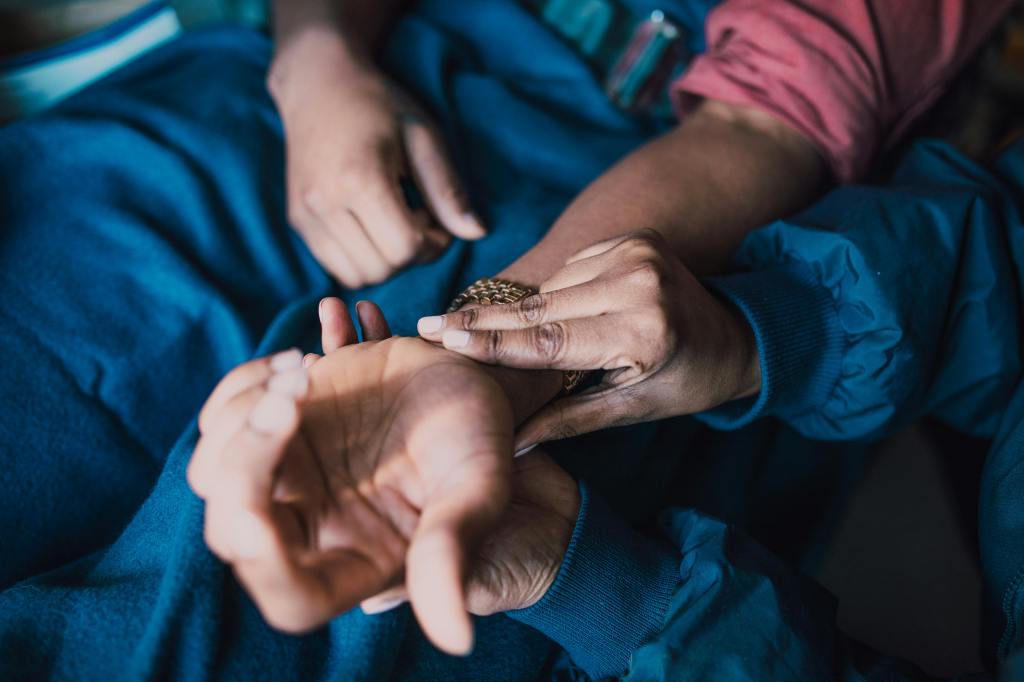
    Have you ever visited a clinic where a healthcare professional checks your temperature, pulse, blood pressure, or respiratory rate? Ever wondered why? These measurements are called vital signs, basic indicators that reveal how well your body’s essential systems are functioning. Think of them as the body’s quick status check: the warning lights on a car’s dashboard, or even your bank balance, if you catch my drift.

    In today’s reading from Mark, we encounter Jesus performing a quick “status check” of His own, on a fig tree. He was hungry and saw the tree from a distance. It had leaves. That was promising.
    When a fig tree has leaves, fruit should follow. Jesus knew this. It was expected. The vital signs pointed to a healthy, fruitful tree. Yet when He approached the tree, He found nothing. No fruit. Only leaves. How disappointing!

    Luke records a similar moment in the parable of the barren fig tree. The owner of the vineyard, God, comes expecting fruit from His tree: us. He expects it. And rightly so. Considering the immense investment of His only begotten Son, Jesus, the keeper of the vineyard, who tends, nourishes, and intercedes for us, how could He expect anything less?

    The owner says to the keeper of the vineyard, “Look, for three years I have come seeking fruit on this fig tree and find none. Cut it down; why should it use up the ground?”

    But the vinedresser pleads, “Sir, let it alone this year also, until I dig around it and fertilize it. And if it bears fruit, well. But if not, after that you can cut it down.”

    The question presses itself upon us: Are we bearing fruit?

    Fruition is the natural outcome of a branch’s connection to the vine (John 15:4–5). Fruit does not come from striving, but from abiding. The presence, or absence, of fruit is a vital sign that reveals the health of our relationship with God. Are we bearing fruit?

    Fruit is what the world experiences when it encounters us. It is the visible result of the inward work of the Holy Spirit (Galatians 5:22–23): love, joy, peace, patience, kindness, goodness, faithfulness, gentleness, and self-control. Are we bearing fruit?

    Fruit is the quiet but irresistible light your good deeds give off, the savour of Christ your life exudes, causing others to glorify God (Matthew 5:16). Are we bearing fruit?

    Biologically, fruits exist to carry seeds to ensure continuation and multiplication, even under harsh conditions. Spiritually, fruit looks like witness and disciple-making: lives transformed and faith reproduced (Matthew 28:19–20). Are we bearing fruit?

    One remarkable thing about fig trees is that they advertise their fruit by producing leaves. Which leads to a sobering question: if we profess Christ, what evidence do we offer to support that claim?

    In today’s scripture, we find Jesus’ heart-warming plea when the owner of the vineyard asked for the unfruitful tree to be cut down: “Sir, let it alone this year … until I dig around it and fertilize it…”

    This is mercy. But it is mercy with an expectation. Jesus has allowed us the opportunity and mercy of the present to get things right: to abide closely, love Him more dearly and follow Him more nearly. Christ’s sacrifice must count for something!

    “That [we] may walk worthy of the Lord, fully pleasing Him, being fruitful in every good work and increasing in the knowledge of God” (Colossians 1:10).

    Let us pray

    Father,
    We come before You with open hearts and unguarded lives.
    You see us as we truly are, beyond appearances, beyond leaves and language.
    You search for fruit.

    Lord, we confess that there are seasons when we look alive,
    yet inwardly we have grown barren.
    We have mastered the form, but neglected the flow.
    We have worn the leaves, but withheld the fruit.

    Thank You for Your patience.
    Thank You for the mercy that digs around our roots,
    for the grace that fertilizes tired soil,
    for the Son who intercedes when judgment feels deserved.

    Teach us to abide in You,
    To remain close to You, the true Vine.
    Let Your Spirit work deeply within us,
    producing love where there was indifference,
    peace where there was restlessness,
    and obedience where there was resistance.

    Make our lives a blessing others can taste.
    Let our words, our actions, and our presence
    quietly point the world back to You.
    May our lives proclaim Your glory
    without needing to announce it.

    Lord, while there is still time,
    Do Your work in us.
    Prune what must be removed.
    Strengthen what is weak.
    And let us be found fruitful,
    fully pleasing to You.

    We ask this in the name of Jesus,
    the faithful Keeper of the vineyard.

    Amen.