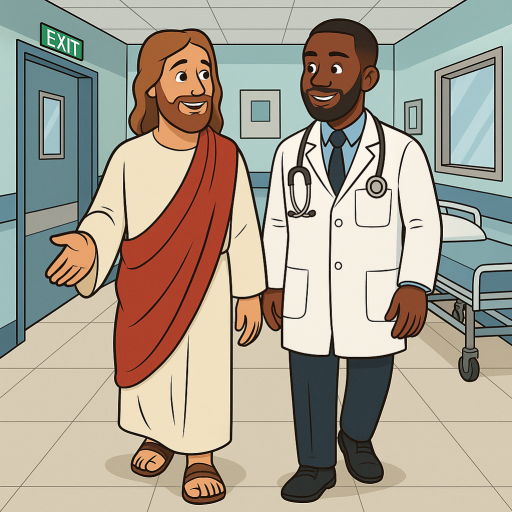

Scripture reading: Matthew 28:16-20
You can listen to this devotional via Spotify or YouTube.
Viral infections are known to be highly contagious. Once an infection is established, it can spread through direct contact, through the air, on surfaces, via carriers, or even from mother to child. One infected person can transmit it to many, who in turn transmit it further. What begins with a single host can expand exponentially across communities, cities, and nations. The recent COVID-19 pandemic is a clear case in point. What started in one location quickly spread across the globe, affecting millions.
In the digital world, “viral” content spreads in a similar way. On platforms like TikTok or YouTube, one person shares a video or post, others repost it, and networks multiply it rapidly. Algorithms amplify their reach, and soon it is everywhere.
Virality, whether biological or digital, follows a simple pattern: contact leads to multiplication, and subsequently expansion.
In Matthew 28:19–20, Jesus gave His disciples this charge: “Go therefore and make disciples of all nations…” It was, in essence, a command to make the Gospel spread to the ends of the earth. Not long afterwards, empowered by the Holy Spirit (Acts 1:8), the Gospel began to spread rapidly. By the time we read Acts of the Apostles 17:6, critics were saying: “These men who have turned the world upside down have come here also.” The message spread so widely that it unsettled the Roman world. Many believers paid for it with their lives. Yet they could not remain silent. The message was too good, and everyone needed to hear it.
The Gospel literally means “good news.” It is the message of God’s love and redemption through Jesus Christ. The Gospel announces that: Humanity was separated from God because of sin (Romans 3:23), God provided a way back through Jesus Christ, who lived perfectly, died for our sins, and rose again (1 Corinthians 15:3–4), Whoever believes in Him receives forgiveness, new life, and eternal life (John 3:16; 2 Corinthians 5:17), and this new life transforms character, relationships, and purpose (Ezekiel 36:26; Galatians 5:22–23).
The Gospel is not merely moral advice or a religious story. It is “the power of God for salvation” (Romans 1:16). It is the ultimate life-giving contagion because it strengthens, restores, and multiplies in ways nothing else can.
If today a cure for HIV/AIDS were discovered, that news would spread instantly across the globe. The Gospel proclaims the cure for sin. It announces deliverance from eternal separation from God (John 5:24). Everybody needs to hear it. Every true Christian is called to share it.
How to we Spread This Holy Contagion
1. Abide in Christ
Jesus revealed the foundation in Gospel of John 15:4–5:
“Abide in me… Whoever abides in me and I in him, he it is that bears much fruit.”
Abiding produces fruit. Fruit carries seed. Seed multiplies life.
Spend time in prayer (1 Thessalonians 5:17), in Scripture (2 Timothy 3:16–17), and in worship. Let your relationship with Christ shape your every word and action.
2. Live a Fruitful Life
The fruit of the Spirit — love, joy, peace, patience, kindness, goodness, faithfulness, gentleness, and self-control — is listed in Galatians 5:22–23.
Let others see Christ in your conduct before they hear Him in your words (Matthew 5:16). A transformed life is compelling evidence of a transforming Saviour.
3. Share Your Testimony Naturally
“You will be my witnesses” (Acts 1:8).
Speak about what Christ has done in your life. Share your struggles, victories, and growth. A witness simply tells what they have seen and experienced.
4. Engage Your Networks
Viruses often spread from an epicenter. In the early church, that center was Jerusalem (Acts 1:8). Start with your immediate circle — family, friends, colleagues, church, and online communities — and allow the message to multiply relationally.
5. Use Every Platform Faithfully
No avenue is insignificant. Whether through social media, small groups, writing, music, or conversation, share Scripture and encouragement (Colossians 4:6).
6. Pray for opportunities and Open Doors
Paul asked believers to pray “that God may open to us a door for the word” (Colossians 4:3). Ask God to prepare hearts and to make your witness fruitful.
7. Teach and Disciple
The command was not merely to make converts, but disciples (Matthew 28:19–20). Guide others to grow. A disciple who bears fruit becomes a multiplier (2 Timothy 2:2).
A Sobering Reminder
Recently, reports indicated that a popular actor, Eric Dane, died from Amyotrophic lateral sclerosis. In his interview on Netflix, it was painfully evident how severely the disease had taken its toll on him.
In Amyotrophic lateral sclerosis (ALS), motor neurons slowly degenerate and die. As they stop sending signals to the muscles, the body weakens, deteriorates, and eventually loses vital functions.
Sin operates in a far deeper way. “The wages of sin is death” (Romans 6:23). Left untreated, it cripples and ultimately destroys.
The Gospel proclaims the cure for sin, and it remains truly “good news” only if it reaches its hearers in time. The longer it is withheld, the more firmly sin entrenches itself. If you possessed the cure, would you keep it to yourself, or would you share it?
Questions to Reflect On
- If someone spent a week near me, what would they “catch”?
- Am I abiding deeply enough for fruit to form?
- Does my witness flow from transformation or obligation?
- Am I intentionally using my networks to spread life?
Let us pray
Lord Jesus,
Abide in me as I abide in You.
Let Your life take root so deeply that fruit becomes inevitable.
Make my love visible.
Make my peace steady.
Make my witness natural.
Make my life a channel of Your transforming power.
Help me share the Gospel through words, actions, and presence,
so that Your life spreads, multiplies, and bears eternal fruit.
Amen.


 On Rounds with Jesus