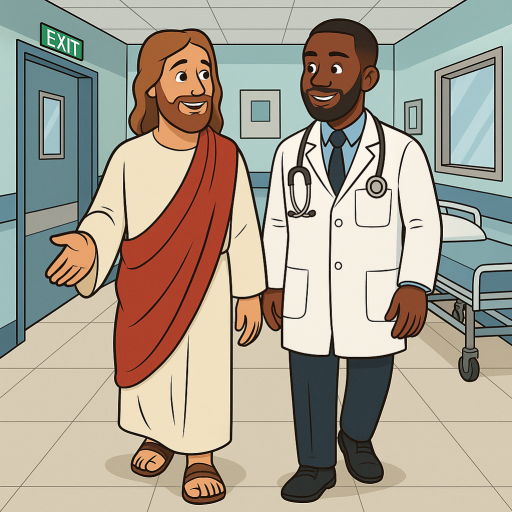

Tag: Bible reflection

  • Viral

    Viral

    Scripture reading: Matthew 28:16-20

    Viral infections are known to be highly contagious. Once an infection is established, it can spread through direct contact, through the air, on surfaces, via carriers, or even from mother to child. One infected person can transmit it to many, who in turn transmit it further. What begins with a single host can expand exponentially across communities, cities, and nations. The recent COVID-19 pandemic is a clear case in point. What started in one location quickly spread across the globe, affecting millions.

    In the digital world, “viral” content spreads in a similar way. On platforms like TikTok or YouTube, one person shares a video or post, others repost it, and networks multiply it rapidly. Algorithms amplify their reach, and soon it is everywhere.

    Virality, whether biological or digital, follows a simple pattern: contact leads to multiplication, and subsequently expansion.

    In Matthew 28:19–20, Jesus gave His disciples this charge: “Go therefore and make disciples of all nations…” It was, in essence, a command to make the Gospel spread to the ends of the earth. Not long afterwards, empowered by the Holy Spirit (Acts 1:8), the Gospel began to spread rapidly. By the time we read Acts of the Apostles 17:6, critics were saying: “These men who have turned the world upside down have come here also.” The message spread so widely that it unsettled the Roman world. Many believers paid for it with their lives. Yet they could not remain silent. The message was too good, and everyone needed to hear it.

    The Gospel literally means “good news.” It is the message of God’s love and redemption through Jesus Christ. The Gospel announces that: Humanity was separated from God because of sin (Romans 3:23), God provided a way back through Jesus Christ, who lived perfectly, died for our sins, and rose again (1 Corinthians 15:3–4), Whoever believes in Him receives forgiveness, new life, and eternal life (John 3:16; 2 Corinthians 5:17), and this new life transforms character, relationships, and purpose (Ezekiel 36:26; Galatians 5:22–23).

    The Gospel is not merely moral advice or a religious story. It is “the power of God for salvation” (Romans 1:16). It is the ultimate life-giving contagion because it strengthens, restores, and multiplies in ways nothing else can.

    If today a cure for HIV/AIDS were discovered, that news would spread instantly across the globe. The Gospel proclaims the cure for sin. It announces deliverance from eternal separation from God (John 5:24). Everybody needs to hear it. Every true Christian is called to share it.

    How to we Spread This Holy Contagion

    1. Abide in Christ

    Jesus revealed the foundation in Gospel of John 15:4–5:

    “Abide in me… Whoever abides in me and I in him, he it is that bears much fruit.”

    Abiding produces fruit. Fruit carries seed. Seed multiplies life.

    Spend time in prayer (1 Thessalonians 5:17), in Scripture (2 Timothy 3:16–17), and in worship. Let your relationship with Christ shape your every word and action.

    2. Live a Fruitful Life

    The fruit of the Spirit — love, joy, peace, patience, kindness, goodness, faithfulness, gentleness, and self-control — is listed in Galatians 5:22–23.

    Let others see Christ in your conduct before they hear Him in your words (Matthew 5:16). A transformed life is compelling evidence of a transforming Saviour.

    3. Share Your Testimony Naturally

    “You will be my witnesses” (Acts 1:8).

    Speak about what Christ has done in your life. Share your struggles, victories, and growth. A witness simply tells what they have seen and experienced.

    4. Engage Your Networks

    Viruses often spread from an epicenter. In the early church, that center was Jerusalem (Acts 1:8). Start with your immediate circle — family, friends, colleagues, church, and online communities — and allow the message to multiply relationally.

    5. Use Every Platform Faithfully

    No avenue is insignificant. Whether through social media, small groups, writing, music, or conversation, share Scripture and encouragement (Colossians 4:6).

    6. Pray for opportunities and Open Doors

    Paul asked believers to pray “that God may open to us a door for the word” (Colossians 4:3). Ask God to prepare hearts and to make your witness fruitful.

    7. Teach and Disciple

    The command was not merely to make converts, but disciples (Matthew 28:19–20). Guide others to grow. A disciple who bears fruit becomes a multiplier (2 Timothy 2:2).

    A Sobering Reminder

    Recently, reports indicated that a popular actor, Eric Dane, died from Amyotrophic lateral sclerosis. In his interview on Netflix, it was painfully evident how severely the disease had taken its toll on him.

    In Amyotrophic lateral sclerosis (ALS), motor neurons slowly degenerate and die. As they stop sending signals to the muscles, the body weakens, deteriorates, and eventually loses vital functions.

    Sin operates in a far deeper way. “The wages of sin is death” (Romans 6:23). Left untreated, it cripples and ultimately destroys.

    The Gospel proclaims the cure for sin, and it remains truly “good news” only if it reaches its hearers in time. The longer it is withheld, the more firmly sin entrenches itself. If you possessed the cure, would you keep it to yourself, or would you share it?

    Questions to Reflect On

    • If someone spent a week near me, what would they “catch”?
    • Am I abiding deeply enough for fruit to form?
    • Does my witness flow from transformation or obligation?
    • Am I intentionally using my networks to spread life?

    Let us pray

    Lord Jesus,
    Abide in me as I abide in You.
    Let Your life take root so deeply that fruit becomes inevitable.

    Make my love visible.
    Make my peace steady.
    Make my witness natural.
    Make my life a channel of Your transforming power.

    Help me share the Gospel through words, actions, and presence,
    so that Your life spreads, multiplies, and bears eternal fruit.

    Amen.

  • Reborn

    Reborn

    Scripture reading: John 3:1-8, Galatians 5:19-23

    At conception, special cells carrying half of the genetic information from each parent fuse in a process called fertilization. This marks the beginning of a nine-month journey that culminates in the birth of a baby. At birth, that child already carries inherited features that will gradually find expression in the way they look, speak, and even behave. Genes make this possible. They shape how the body looks and how it functions.

    Sometimes, however, the genes a person inherits may also predispose them to disease. In the past, there was very little that could be done about genetic conditions such as sickle cell disease, where red blood cells become abnormally shaped under stress, leading to pain and complications. Today, advances in medical science offer new hope. Through gene-editing technology, it is now possible to modify a patient’s own blood stem cells to produce high levels of fetal haemoglobin, preventing red blood cells from sickling. By restoring healthy oxygen flow, this innovation offers the possibility of a one-time, transformative treatment without the need for donor transplants.

    Spiritually speaking, humanity also carries an inherited condition. By default, we are sinful. It is our nature, something we are born into. When Jesus said, “Unless one is born again, he cannot see the kingdom of God,” He was revealing that entry into God’s righteous domain is not possible while we remain in our natural state. We require a complete inner renewal – a spiritual re-engineering.

    This renewal comes through faith in the saving work of Jesus Christ on Calvary’s cross. We are not called to return physically to the womb, as Nicodemus imagined, but to experience a new birth, one that transforms our very nature.

    When we believe, God places His Spirit within us. From that moment, a hidden work begins, much like the unseen development of a child in the womb. Quietly and gradually, the Spirit reshapes us into the likeness of Christ. This process takes time. And its outcome becomes visible in what Scripture calls the fruit of the Spirit: love, joy, peace, patience, kindness, goodness, faithfulness, gentleness, and self-control.

    Just as a mother does not consciously assemble the organs of her growing baby, spiritual fruit is not produced by sheer human effort. The mother’s role is to nurture the environment, to eat well, avoid harmful substances, and attend regular care. Likewise, our role is not to manufacture transformation, but to cooperate with it.

    Spiritual growth comes through yielding to the Holy Spirit, through daily surrender, prayer, Scripture, and sensitivity to His leading. As we align our hearts with God’s will, He works within us, shaping our character from the inside out. Yet we must remain willing participants. Though the work is God’s, we can resist or hinder it through sin, neglect, or indifference.

    Ask any pregnant woman – carrying new life is not always comfortable. There are cravings that are not necessarily healthy, sacrifices to be made and moments of strain. But in the end, the joy of new life makes the journey worthwhile. So it is with spiritual growth.

    As we trust God’s Spirit to work in us, both to will and to do according to His good pleasure, we can be confident that the character He is forming within us will prepare us for our place in His Kingdom.

    Reflections

    1. In what areas of my life am I still relying on self-effort instead of yielding to the transforming work of the Holy Spirit?
    2. What habits, attitudes, or “old nature” patterns might be resisting God’s regenerating work within me?
    3. How can I intentionally create space for the Spirit’s hidden work in my daily life through surrender, prayer, and obedience?

    Let us Pray

    Heavenly Father,

    Thank You for offering me new life through Christ.

    Holy Spirit, shape me quietly from within. Teach me to yield, to trust, and to rest in Your transforming grace.

    Let Your life grow in me until I reflect Your love, Your peace, and Your likeness.

    In Jesus’ name,
    Amen.

  • Inertia

    Inertia

    Scripture reading: Luke 9:57–62

    In physics, inertia is the tendency of an object to resist change, to stay at rest or keep moving in the same direction unless acted upon by an external force. Spiritually, inertia looks like knowing what God asks of us, yet remaining unmoved. We believe, but delay. We agree, but do not act. Faith stalls when comfort becomes stronger than conviction.

    Jesus confronts spiritual inertia directly in this week’s reading. In Luke 9, several people express willingness to follow Him, but always with delay. One wants to first bury his father. Another wants to say goodbye at home. None of these requests sounds sinful per se, yet Jesus responds with striking urgency: “No one who puts a hand to the plow and looks back is fit for service in the kingdom of God.”

    Their problem was not refusal, but hesitation. They felt the pull of comfort, tradition, and unfinished business. Like many of us, they intended to follow, but not immediately.

    Spiritual inertia often disguises itself as responsibility or timing. We tell ourselves we will obey once things settle down, once we feel ready, once life is less demanding. But Jesus calls for movement now. The kingdom advances through responsive hearts, not postponed ones.

    God’s grace is the force that breaks inertia. His Spirit empowers us to move, but obedience must meet that grace. When we respond, even imperfectly, momentum begins, and God’s power carries us forward. Like a parked car on a hill, it takes effort to start pushing it, but once it moves, even a gentle push keeps it rolling. Obedience works the same way. The first step is often the hardest. Yet that step invites God’s power to carry us forward.

    This year, your charge is to move – take that first step in faith!

    Reflection

    • Where have you grown comfortable instead of obedient?
    • What instruction from God have you delayed acting on?
    • What one small step can you take today to break spiritual inertia?

    Do not wait for perfect motivation. Act on present obedience.

    Prayer

    Lord, I confess the places where I have grown still when You called me to move. Break every spiritual inertia in my heart. Give me courage to obey promptly and faith to trust You with the outcome. Let Your Spirit be the force that moves me from intention to action. Amen.

    Closing Thought

    Faith that moves, even slowly, pleases God more than faith that only agrees. Today, choose movement. Even a step matters.

  • Stone or bread

    Stone or bread

    In clinical practice, patients often come with expectations, preferences, or even self-diagnoses. A client may ask for a particular test, drug, or procedure. But as a clinician, you know that their request may not always be in their best interest. Your role is to listen with compassion, then guide them toward what is safe, effective, and ultimately for their good—even if it’s different from what they initially wanted.

    Parents deal with something similar. My toddler loves to pick up things—some safe, some harmful. She may cry, protest, or throw a tantrum when I take away what she wants, but part of my role as a parent is to know what is truly good for her. I will never hand her something that would hurt her, no matter how hard she pleads. Love sometimes means saying no.

    This is the heart of Matthew 7:7–11. Jesus tells us to ask, seek, and knock—and assures us that our Father in heaven will answer. But like toddlers with their parents, or patients with their clinicians, we don’t always know what is best for us. God, however, does. God, in His wisdom, sometimes says no or wait, not because He is withholding good from us, but because He is protecting us from harm or preparing us for something better. He is the Father who never gives a stone when we ask for bread, or a snake when we ask for fish. He may not always give us exactly what we want, but He always gives us what is good.

    So whether in parenting, in medicine, or in our walk with God, love is not about granting every request—it is about providing what brings life, growth, and true blessing. And we can trust that our heavenly Father, far wiser and kinder than any earthly parent or clinician, will always do just that.

    Applications

    1. Trust God’s wisdom – When God answers differently than we expected, remind yourself that His love always seeks your good.
    2. Practice discernment in prayer – Instead of only asking for what you want, also pray: “Lord, give me what You know is best.”
    3. Patience in waiting – Just as a child eventually sees why the parent withheld something, we too may only understand God’s “no” in hindsight.

    Reflections

    • Can I recall a time when God did not give me what I prayed for, but later I saw it was for my good?
    • In what ways do I need to trust His wisdom more deeply right now?
    • How can I model God’s loving discernment in how I guide others under my care?

    Let us pray

    Heavenly Father, thank You for being wiser than my desires and more loving than my understanding. Forgive me when I confuse Your no or wait for neglect. Teach me to trust that You always give good gifts, even when they look different from what I asked for. Help me reflect Your wisdom and love in the way I guide others—whether as a parent, a professional, or a friend. May my life bear witness to the truth that You are a good Father who gives not stones or snakes, but bread and fish. In Jesus’ name, Amen.