Category: Devotionals

  • Authority

    Authority

    Scripture reading: Matthew 8:5-13

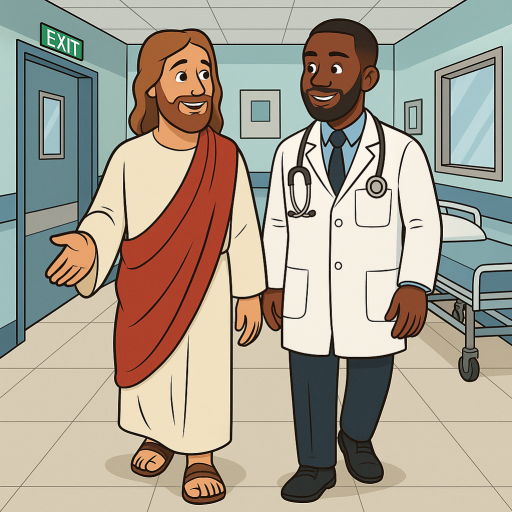
    The highest level of decision-making in the clinical setting often comes from the consultant. He or she is usually the most experienced and knowledgeable member of the team. What he or she says must be done. When the team is at its wits’ end in managing a case, the consultant is the one they turn to, and more often than not, he or she comes through. The consultant is the last rung on the clinical ladder.

    In today’s reading from Matthew 8:5—13, the consultant is somewhat akin to what the centurion refers to as a man under authority.

    Authority means power—power to exert influence or command obedience. A Roman centurion had come to Jesus concerning his paralysed servant. Jesus offered to come and heal the servant, but the centurion said, “No, wait. Just give the command. Say the word, like a soldier to his subordinates, and it will be done. I know this because I, too, have men under my command. You have authority over all things.” Jesus marvelled at his unusual faith (verse 10), then gave the command. Instantly, the centurion’s servant was healed.

    Say it: “Au-tho-ri-ty!”

    Jesus has the authority to end the cycle of mishaps you seem to be stuck in. Perhaps you haven’t fully believed that Jesus can come through for you. But He is seated at the right hand of God—a place of immense authority. Pray about it in faith. In Jesus’ name, it will be done.

    But that’s not all.

    Jesus has also given us authority: “Behold, I give you the authority to trample on serpents and scorpions, and over all the power of the enemy, and nothing shall by any means hurt you” (Luke 10:19, NKJV). Exercise that authority.

    Power has a source. Then there are channels to outlets. You connect your appliance to an outlet—and then you switch it on. Only then do you see the power at work.

    That’s how you unlock your power: by getting connected to the source. Jesus holds the power. To connect, you must let Him into your life as Lord and Saviour. To stay connected, you need to consistently study His Word, pray, and let His Spirit fill and guide you. The “on-switch” is obedience—when you go where He sends you, when you apply His Word, when you believe…

    …and instantly, the lights come on.

    Say it again: “Pa-wa!”

    Let us pray.

    Dear Lord,
    I thank You that all authority in heaven and on earth belongs to You. You are seated at the right hand of the Father, and there is no situation beyond Your power to redeem. Like the centurion, I believe that You only need to speak the word, and healing will come, restoration will flow, and breakthrough will be mine.

    Forgive me for the times I have doubted Your ability or hesitated to believe in Your authority. Today, I choose to trust in Your word. Speak over my life, my family, my work, and my health—and let Your will be done.

    Empower me to act when You speak, to move when You send, and to believe even when I cannot see. Let my obedience be the switch that turns the power on. And may Your light shine brightly through me.

    In Jesus’ mighty name I pray, Amen.

    Reflections

    1. Who or what do I turn to first when I’m at my wits’ end?
      Do I rely on human expertise alone, or do I trust in the authority of Jesus?
    2. Do I truly believe that Jesus can speak a word and change my situation instantly?
      Reflect on whether your faith matches the centurion’s confidence in Christ’s power.
    3. Am I walking in the spiritual authority Jesus has given me?
      Or am I living beneath the privileges of my identity as a believer?
    4. What does it mean for me to “stay connected” to the power source?
      Consider how consistent prayer, studying the Word, and obeying God’s voice keep you spiritually charged.
    5. Is there an area in my life where obedience is the “on-switch” I’ve been avoiding?
      Reflect on how delayed obedience might be keeping the lights off in that part of your life.
  • Near-miss

    Near-miss

    Scripture reading: John 11:1-44

    In reproductive health circles, a maternal near-miss refers to a situation where a woman almost dies but survives a life-threatening complication during pregnancy, childbirth, or within 42 days of the termination of pregnancy.

    Recently, we had such a near-miss. A client who had undergone an emergency caesarean delivery at a peripheral facility was referred to us because her condition was steadily deteriorating post-operatively. On arrival, we assessed her and found she was bleeding internally. She required massive blood transfusion and urgent surgery. While resuscitating her in preparation for the procedure, her heart stopped. She had to be revived. We nearly lost her.

    In the case of Lazarus, he actually died. Jesus’ appointment with His sick friend had been delayed and by the time He arrived, it was four days too late—at least, that was what Mary and Martha thought. The good Teacher had however been intentional in His delay—“that the Son of God may be glorified through it” (John 11:4).

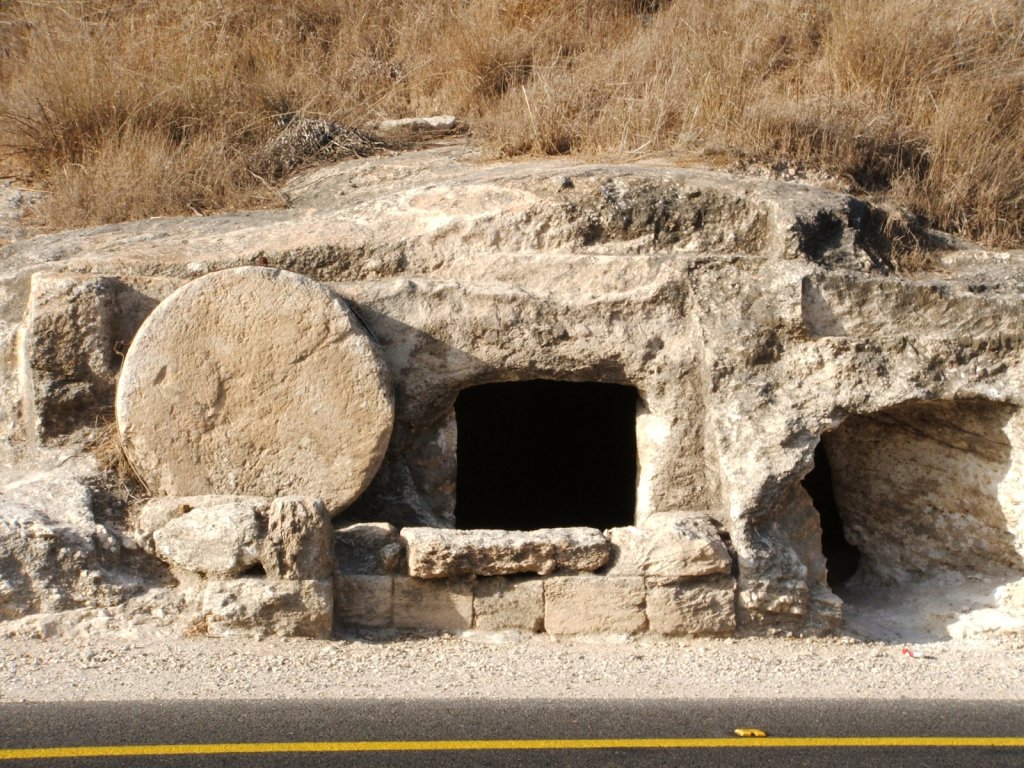
    Jesus arrived at His destination to find His friends mourning, and He mourned with them. He was so moved by their loss that He wept (John 11:35). Jesus feels our pain. He knows about our sufferings. But more importantly, He cares. Groaning in Himself, Jesus came to the tomb. It was a cave, and a stone lay against it. Then Jesus said, “Take away the stone.” Martha, the sister of him who was dead, said to Him, “Lord, by this time there is a stench, for he has been dead four days.”

    Four days after a person dies, the body undergoes significant changes due to decomposition. Initially, the body temperature drops and the muscles stiffen due to rigor mortis, which then gradually fades. Internally, autolysis begins, where enzymes start breaking down cells. This is followed by putrefaction—bacterial activity that causes bloating, discolouration, and the release of foul odours. Gases produced in this process cause the body to swell and leak fluids from its openings. That was Lazarus’ state when Jesus cried out with a loud voice, “Lazarus, come forth!” And immediately, he who had died came out.

    “Did I not say to you that if you would believe, you would see the glory of God?” (John 11:40). Jesus does not miss. But we might narrowly miss out on our miracle if we give in to fear and doubt.

    However bad you think your situation is, as putrid or hopeless as it may seem, Jesus can turn it around. Believe. God can use your pain and misfortune for His glory. Hang in there. Bright skies are coming, where dark clouds have been. Glory is coming!

    Let’s pray

    Thank You for being the God who sees, who feels, and who cares. Thank You for the assurance that even when it seems too late, You are still able to bring life out of death and beauty from brokenness. Like Lazarus, I may face seasons where everything looks hopeless—where the situation stinks and the door is sealed shut—but You are never too late.

    Strengthen my faith to believe even when it hurts, to trust even when I don’t understand. Help me not to give in to fear or doubt. Teach me to wait on You with expectation, knowing that Your glory can still shine through my trials. Revive whatever is dying in me—hope, dreams, relationships, purpose—and call it forth to life again.

    I yield my pain, my past, and my fears to You. Let Your glory be revealed in and through me. In Jesus’ name I pray, Amen.

    Reflections

    1. What situations in your life currently feel hopeless or “too far gone”? Have you brought them before Jesus?
    2. How do you typically respond when God seems delayed?
    3. Can you identify a past experience where God used your pain or delay for something greater? How did that change your view of Him?
    4. What “stone” might Jesus be asking you to roll away—something blocking your faith or obedience?
    5. What would it look like for you to “believe and see the glory of God” in your present circumstance?
  • Watch!

    Watch!

    Scripture reading: Matthew 25:1-13

    One too many times, I have encountered clients who present to the clinic with symptoms too late their prognosis is often already poor. What began as a minor complaint was ignored for far too long. By the time they sought help, it was often too late. In some cases, they had obvious risk factors but never screened. This is why diseases like cervical cancer remain so prevalent in our part of the world: many women do not get screened, and when they finally present with symptoms like persistent vaginal discharge or abnormal bleeding, it is often too late.

    In today’s reading, it was too late for a group of virgins, described as foolish because they failed to prepare adequately for the return of the bridegroom. When their lamps went out, they needed extra oil, but they had none. As the Master delayed, the chances of their lamps still burning at His return grew slimmer. They wasted what was meant to be an opportunity to refill. They waited too long, and their lamps burnt out. When they finally went to get more oil, the bridegroom came. They missed the celebration of a lifetime. Jesus ends the parable with the chilling admonition: “Watch…” This parable was about His second coming. The Lord is not slow in keeping His promise— He tarries out of mercy, longing for all to turn to Him. But the call is clear: we must be continually ready, sustained by His Spirit and His word that keeps our lamps burning. We cannot afford to let complacency lull us to sleep.

    Being ready is an act of faith and wisdom. As the saying goes, he who fails to plan, plans to fail. What you postpone today may cost you dearly tomorrow. Watch! Stay alert. Don’t let your lamp go out. Do not defer to tomorrow what must be done today, lest you miss your appointment with destiny.

    To watch means to be alert, to be careful, to be vigilant, to be conscious, to be intentional, to be well aware, to be in tune with the times and seasons. Watch—lest you fall. Watch, for no one knows the hour…

    Let us pray                                          

    Lord, help me not to delay obedience.

    Keep me from the complacency that makes me ignore the promptings of Your Spirit.

    May I be found ready, my lamp burning brightly, when You return.

    Give me the wisdom to watch, to act, and to live each day prepared.

    Amen.

    Reflection                                                

    What have you been postponing— spiritually, emotionally, or even physically— that you need to act on today?

    Don’t wait. Seek counsel, take that step. Stay ready. Watch!

  • When we pray

    When we pray

    Scripture reading: Matthew 6:5-15, NKJV

    Strong relationships are built on robust communication. Many relationships falter because of communication breakdowns. Christianity, unlike organized religion, is a relationship— one that must be actively maintained through constant, heartfelt communication with God. Prayer is not optional for the Christian; it is essential. It is on this premise that Jesus taught His disciples to pray.

    Jesus emphasized that prayer must be sincere. It must not be draped in flowery language to impress onlookers or ‘manipulate’ God. Prayer is not for show; it is not an exhibit of piety. Eloquence and verbosity do not sway God—it is the heart that moves Him. Prayer must be intimate and precise, and grounded firmly in faith.

    When we pray, we must know who we are addressing: Our Father in Heaven. A Father who cares and loves us deeply. A Father who has our best interests at heart. A willing Father. A dependable Father. Our Father. The word “our” reminds us that we are not alone. We are not alone in our struggles. We are not alone in our journey. We have community, and we have a God who hears us. This understanding must shape our posture in prayer.

    “Hallowed be Your name. Your kingdom come. Your will be done on earth as it is in heaven.”  Prayer begins with God—not us. When we pray, our primary focus should be God’s glory—His Name, His Kingdom, His Will. We pray for God’s name to be honoured in our lives, our circles, and our world. We pray for the earth to be filled with the knowledge of the glory of the Lord, as the waters cover the sea. We pray for His Kingdom to be established on earth and for His will to prevail. We pray for the spread of the gospel, for the salvation of many searching for hope, for healing for the sick, and for liberation of the oppressed. Our prayers must first be directed toward God—and then they can reflect on our needs. Seek first His Kingdom…

    “Give us this day…” One of the cures for worry is daily dependence on God’s provision. In prayer, we entrust our needs to Him. We have a Father who knows us and knows our needs even before we voice them. A Father who gives good gifts to His children. A Father who forgives—and, as He forgives us, our default response to those around us must be one of ready forgiveness.

    When we pray, we must ask for the discipline to resist temptation, and the grace to be delivered from evil. We must pray for wisdom to navigate the inevitable “thirst traps” that plague today’s world, and for the laser-sharp focus to pursue righteousness. We must ask for the strength and endurance to run without growing weary, and the resilience to ultimately overcome.

    When we pray, we lose ourselves and become more and more like our Father in heaven.
    When we pray, we make room for God to reveal His glory more clearly in our lives.
    When we pray, we build the resilience to withstand the storms that life brings our way.
    So pray—because the fervent, constant prayer of the righteous is powerful and effective.

    Let us pray.

    Our Father in heaven,
    Hallowed be Your name.
    Your kingdom come.
    Your will be done
    On earth as it is in heaven.
    Give us this day our daily bread.
    And forgive us our debts,
    As we forgive our debtors.
    And do not lead us into temptation,
    But deliver us from the evil one.
    For Yours is the kingdom and the power and the glory forever.

    Amen.

    Reflection

    What is your prayer life like, and how can you improve it by incorporating the lessons from today’s message?